
Last updated September 20, 2026
Free on-site gate assessment - hinges, posts, and your LiftMaster or Nice gate operator checked before anything is quoted
The assessment is free and the quote is the invoice.

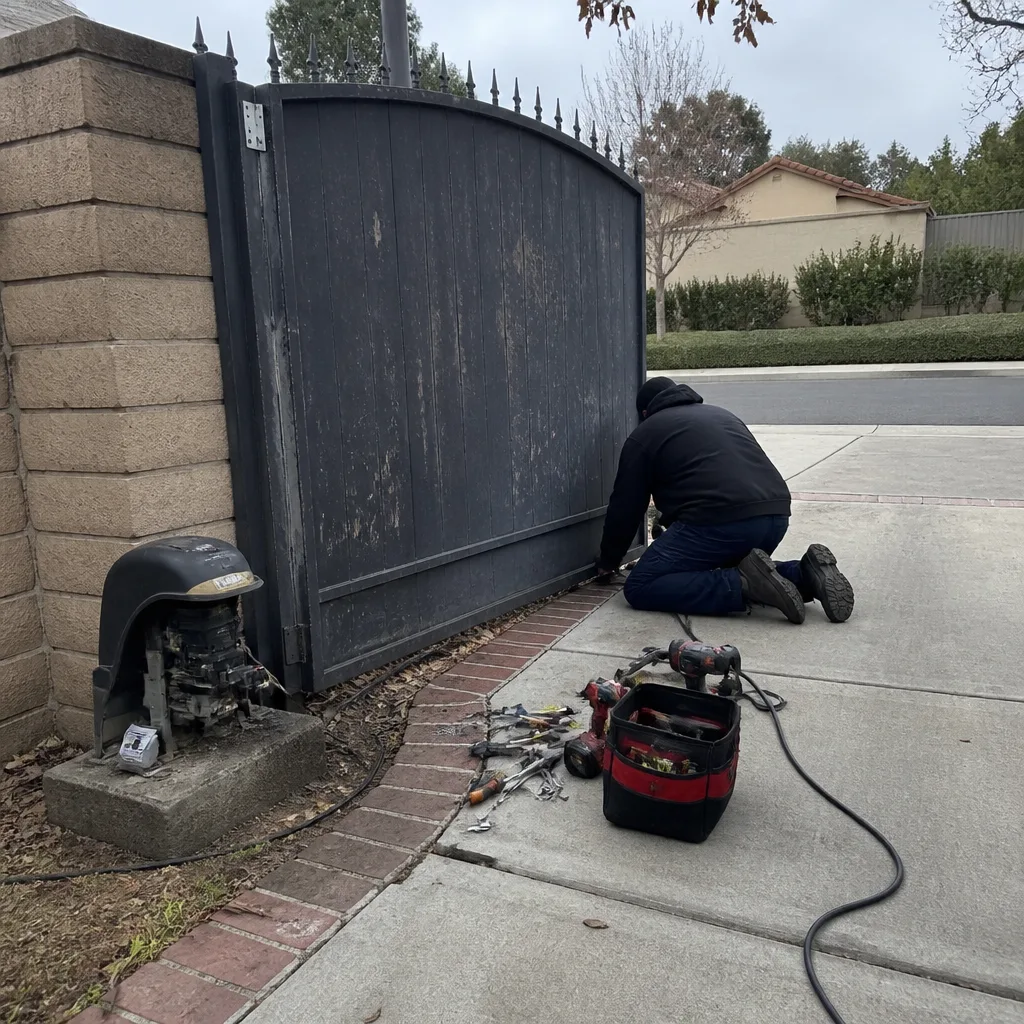 Before
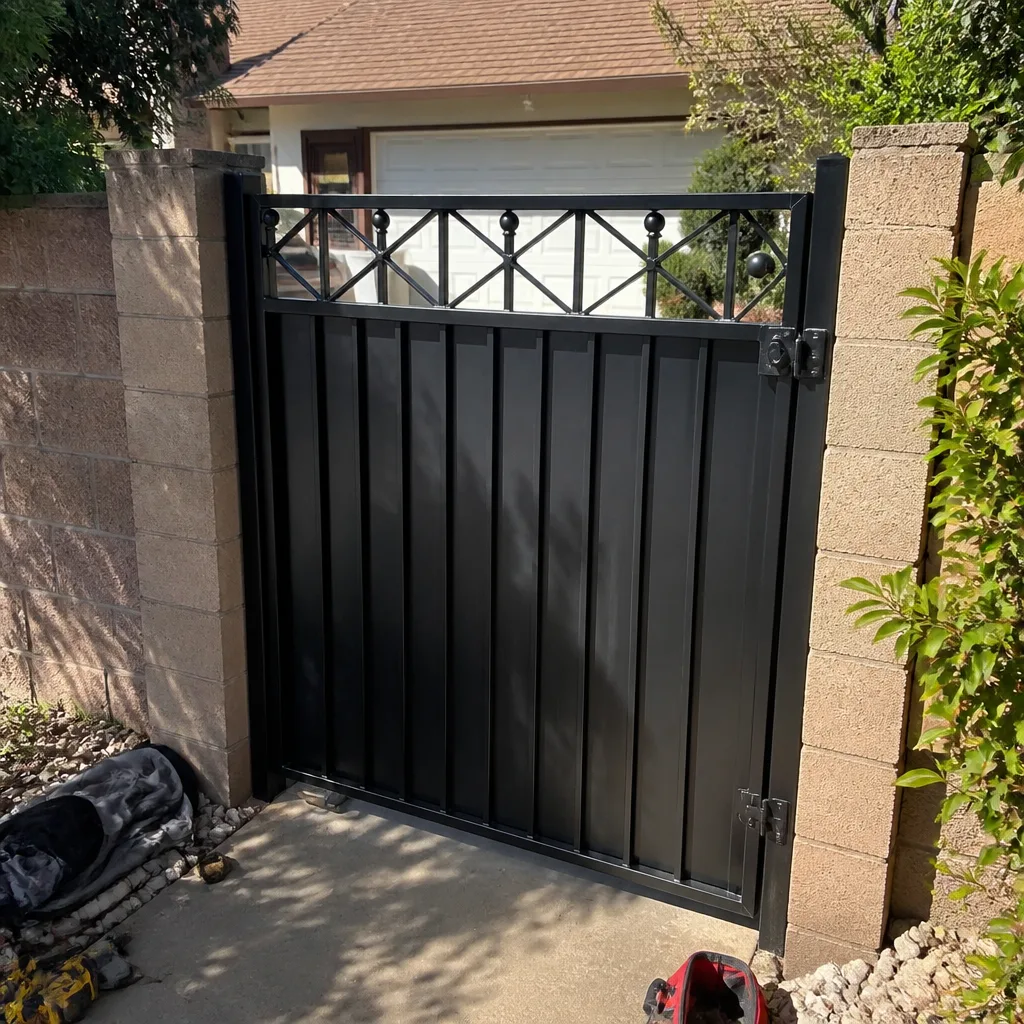 After
After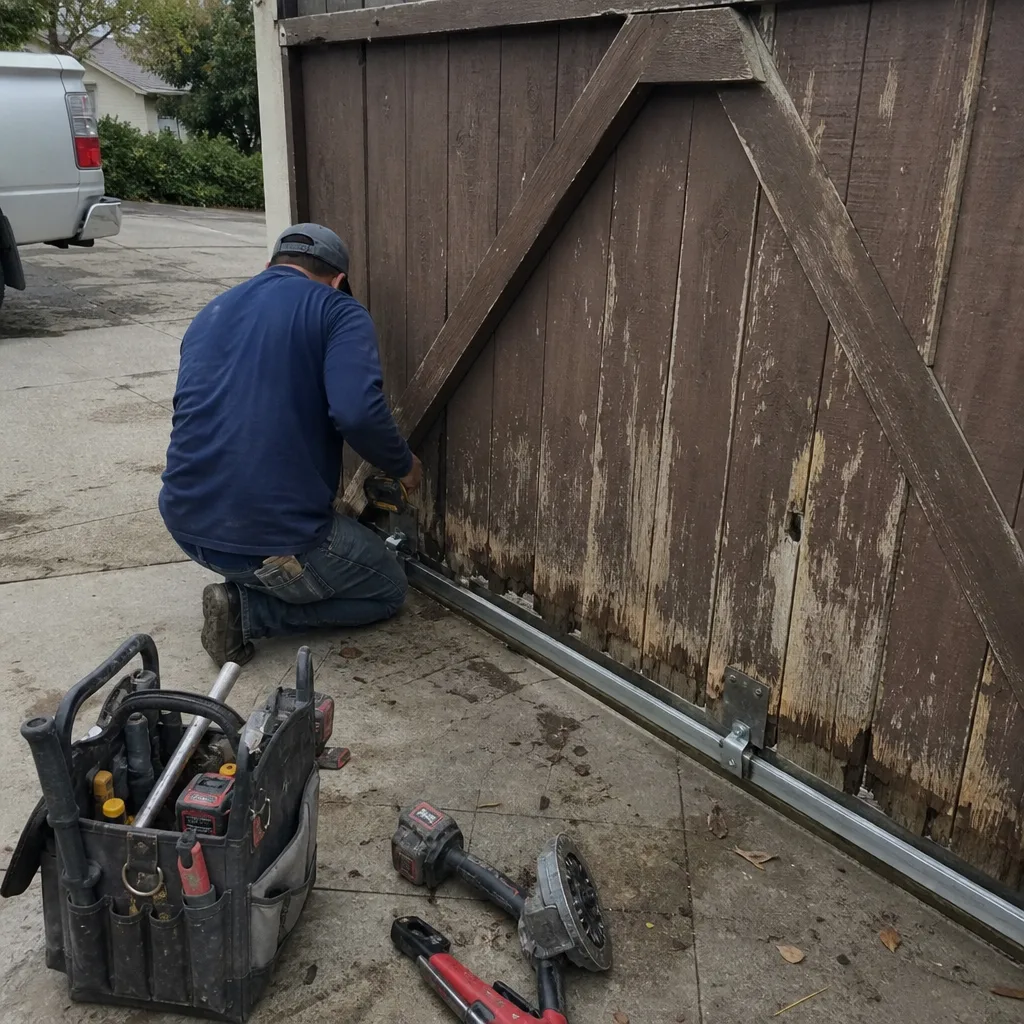 Before
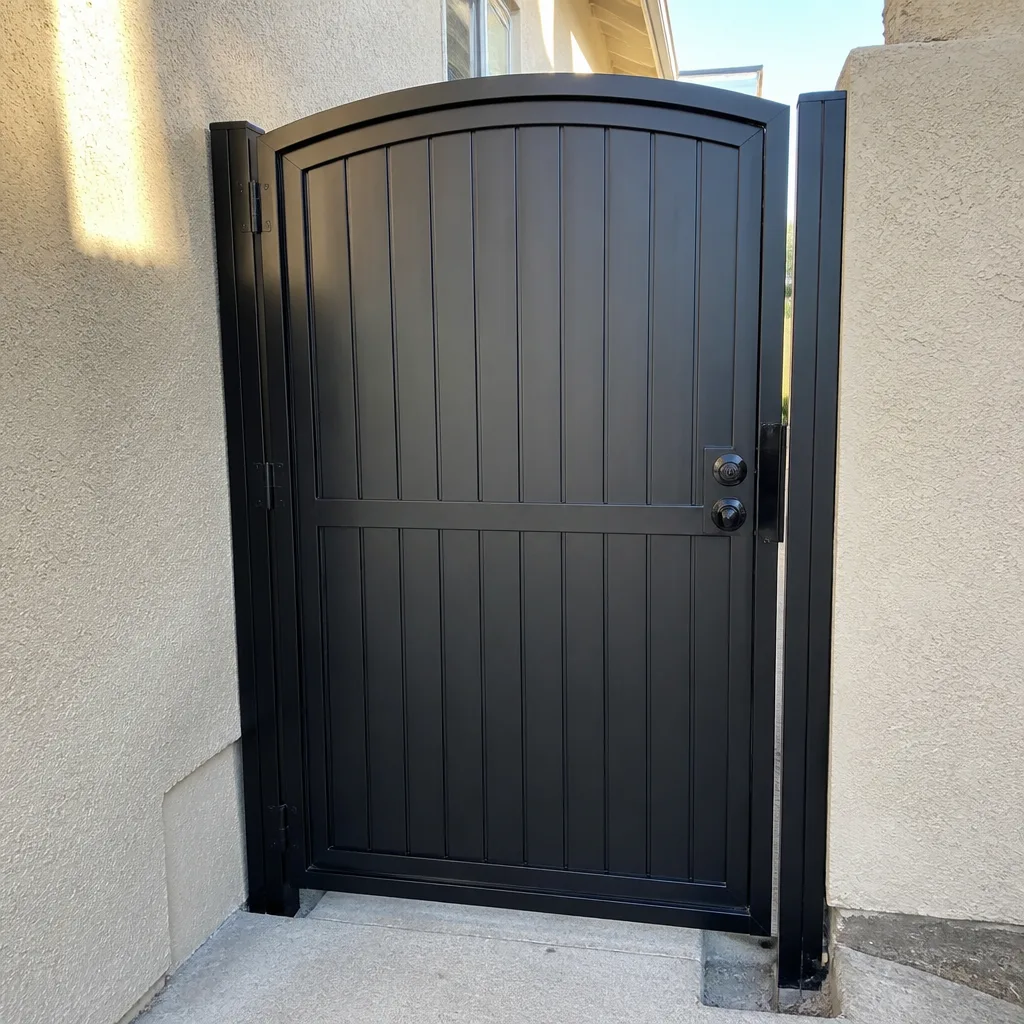 After
After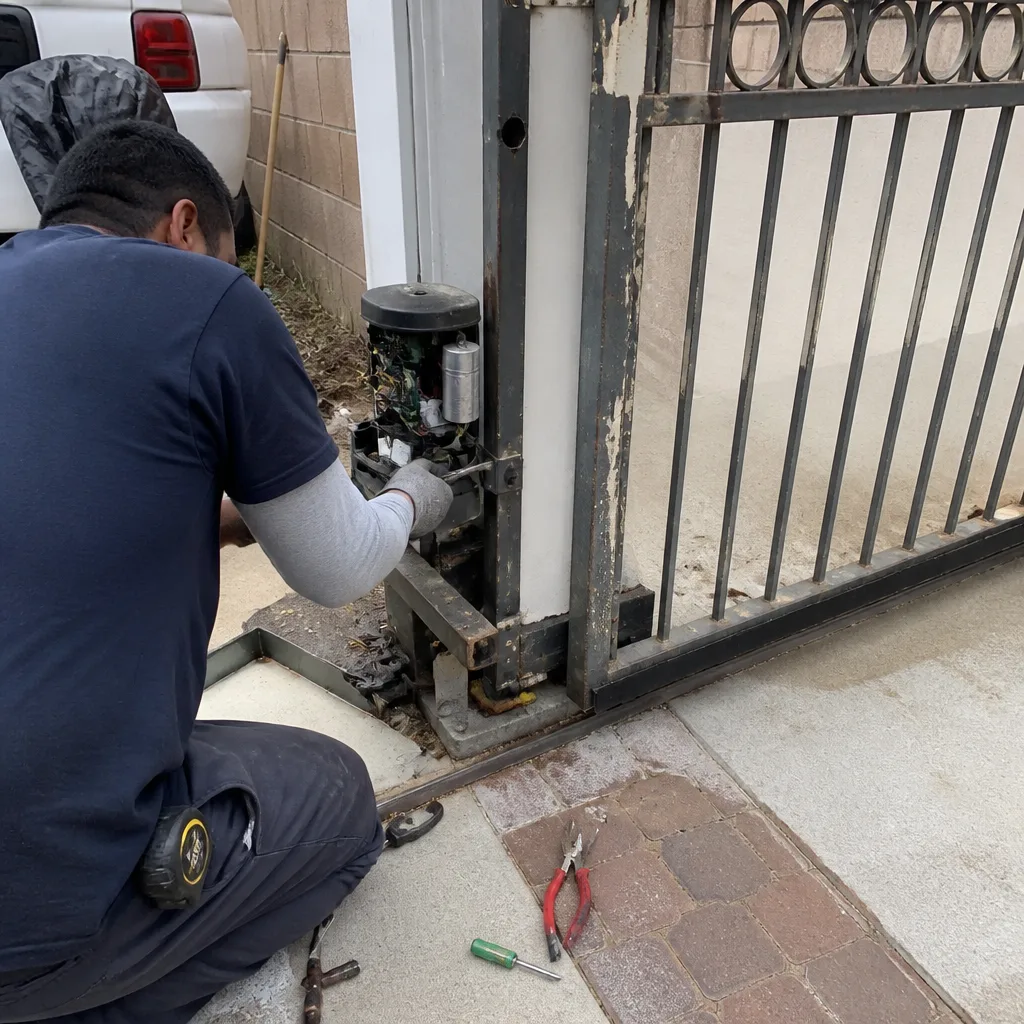 Before
 After
AfterThe Complete Guide to Gate Repair in Simi Valley
Here’s a number that should bother you: in Simi Valley, a meaningful share of the gate repair calls we take at Vance Gate Repair Simi Valley home are second or third attempts at the same fault. Not because the first technician was careless. Because the first technician left nothing behind. No wire map, no limit-switch reading, no photo of the board’s final dip-switch positions. The homeowner paid for a repair, but what they actually bought was a diagnosis nobody wrote down. By the time the next technician arrived, that diagnosis was gone. This guide is about the part of gate repair that keeps everything else standing: the record. We’ll cover what actually fails on gates in this valley’s specific climate, what repairs cost per gate type, what a documented repair should produce, and how your repair record becomes leverage with insurers, buyers, and the next technician who touches your gate.
Quick Answer
Gate repair in Simi Valley typically runs $140 to $260 for common fixes like limit-switch resets, photo-eye alignment, and hinge replacement, while board or motor failures usually land between $380 and $900 depending on brand and access. The most preventable repeat failures happen when no written record exists of what the first technician found and changed. At Gate Repair in Simi Valley, the repair and the documentation of that repair are the same invoice line, because a gate fixed without a record is just a gate waiting to break again.
Table of Contents
- Why Simi Valley Gates Fail Differently
- Gate Types That Dominate Simi Valley Neighborhoods
- What Gate Repair Actually Costs in Simi Valley
- The Documentation a Complete Repair Should Produce
- Why a Verbal Estimate Is a Structural Problem
- The Nine Automation Brands We Service, and What That Matters
- How to Use Your Repair Record as Leverage
- Common Mistakes to Avoid
- When to Call a Professional
- Frequently Asked Questions
BeforeAfterWhy Simi Valley Gates Fail Differently
Simi Valley sits in a heat pocket. Inland, bowl-shaped, summer highs that routinely touch triple digits, and overnight lows that swing twenty-five degrees once the sun drops behind the Santa Susana ridge. That thermal cycling is the quiet engine behind most of the gate failures our Gate Repair services document here. Metal expands during the day and contracts at night. Repeated hundreds of times each season, that cycle loosens hinge welds, shifts limit-switch positions, and causes slide-gate rollers to develop flat spots.
Then add the terrain. Simi Valley’s hillside lots and HOA communities often put gates on slopes, which changes how a swing gate loads its hinges and how a slide gate motor strains against gravity. A gate that operates perfectly on a flat test bench will behave differently on an eight-percent grade off Erringer Road. We see it constantly. The motor isn’t failing because it’s a bad motor; it’s failing because the installation never accounted for the incline.
Direct sun is the third factor. South-facing and west-facing gates in Simi Valley take unobstructed afternoon heat across their control boards, which shortens capacitor life and degrades wire insulation faster than in coastal LA counties. That’s one reason we photograph every control board we open. When a board fails eighteen months later, the photo record tells the next technician whether heat damage was already visible, or whether the failure is new.
Gate Types That Dominate Simi Valley Neighborhoods
Understanding what’s on your property is the first step in any repair conversation. In Simi Valley, three configurations account for the overwhelming majority of residential gates, and each has its own failure personality.
Swing Gates: Single and Dual
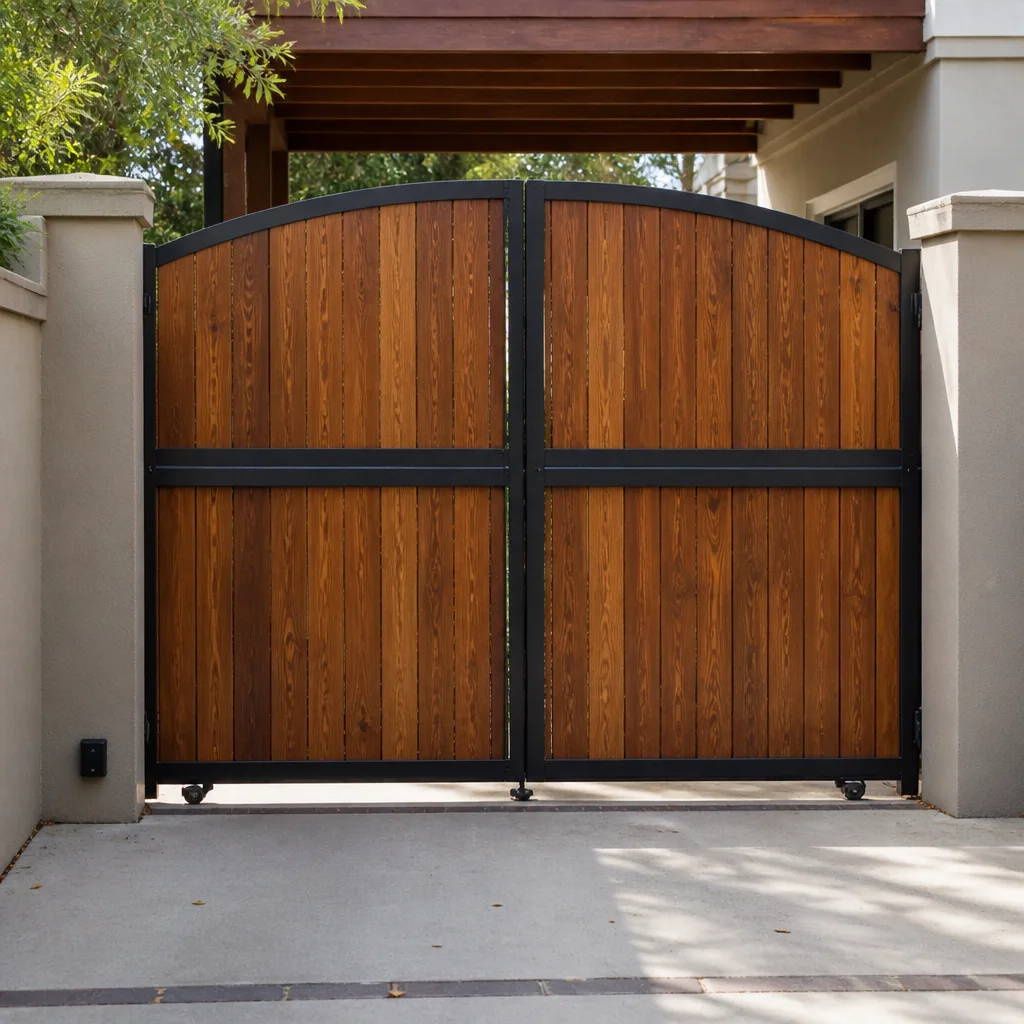
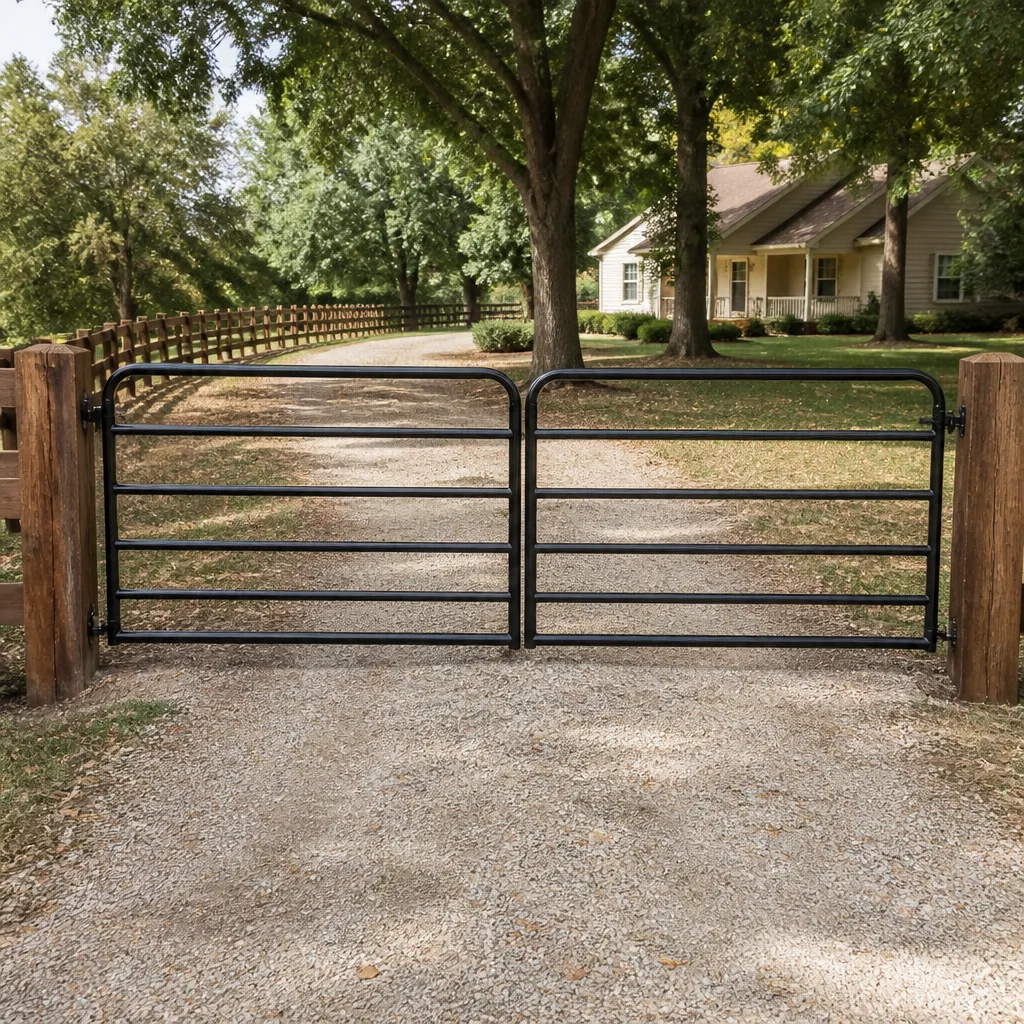
Single swing gates are the most common in older Simi Valley neighborhoods and on hillside lots where a slide track would need grading. The single gate puts all its weight on two hinges and one motor, which means hinge wear is the dominant failure mode. Dual swing gates, common in larger custom homes and HOA communities, add a synchronization requirement: both leaves must open and close together, which means the limit switches on both motors have to be set within about one inch of parity. When one leaf lags, the usual culprits are unequal hinge friction, a low battery in the wireless edge sensor, or a limit switch that drifted a few degrees.
Slide Gates
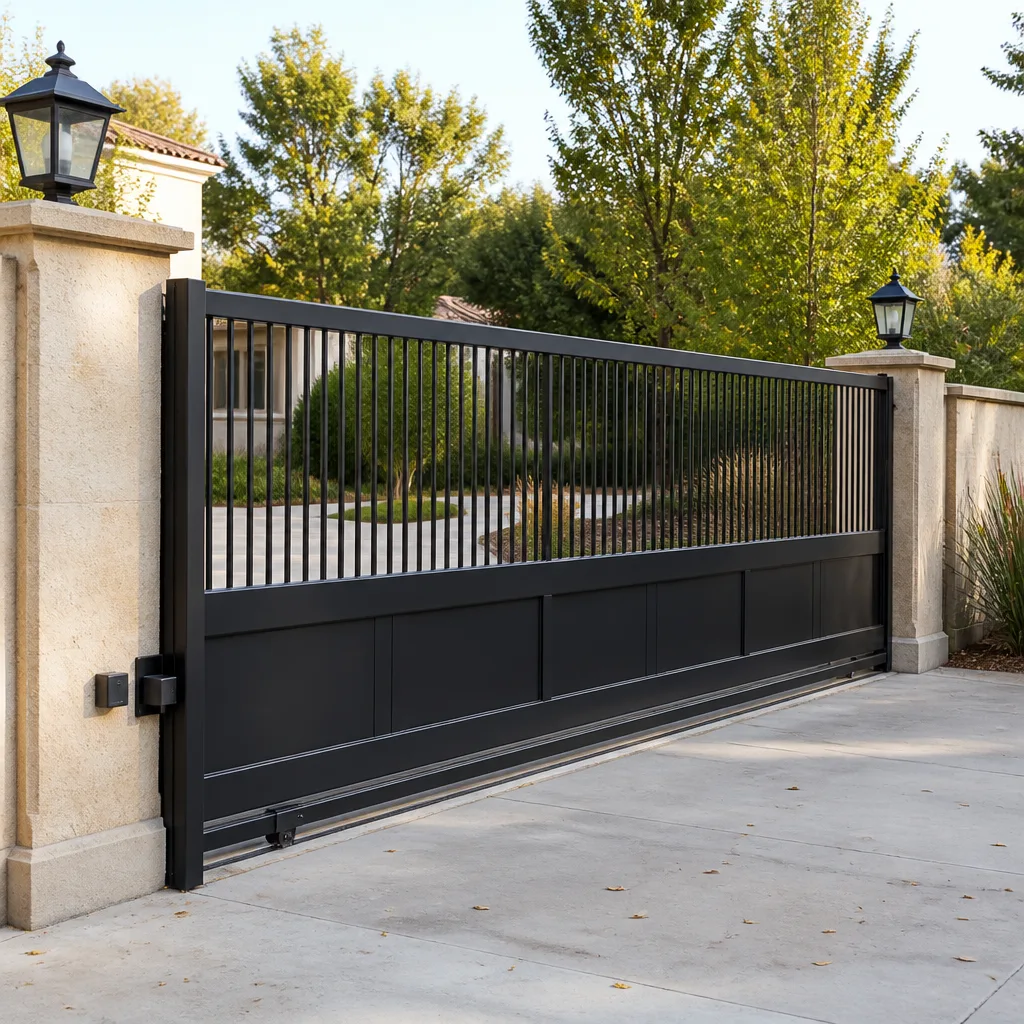
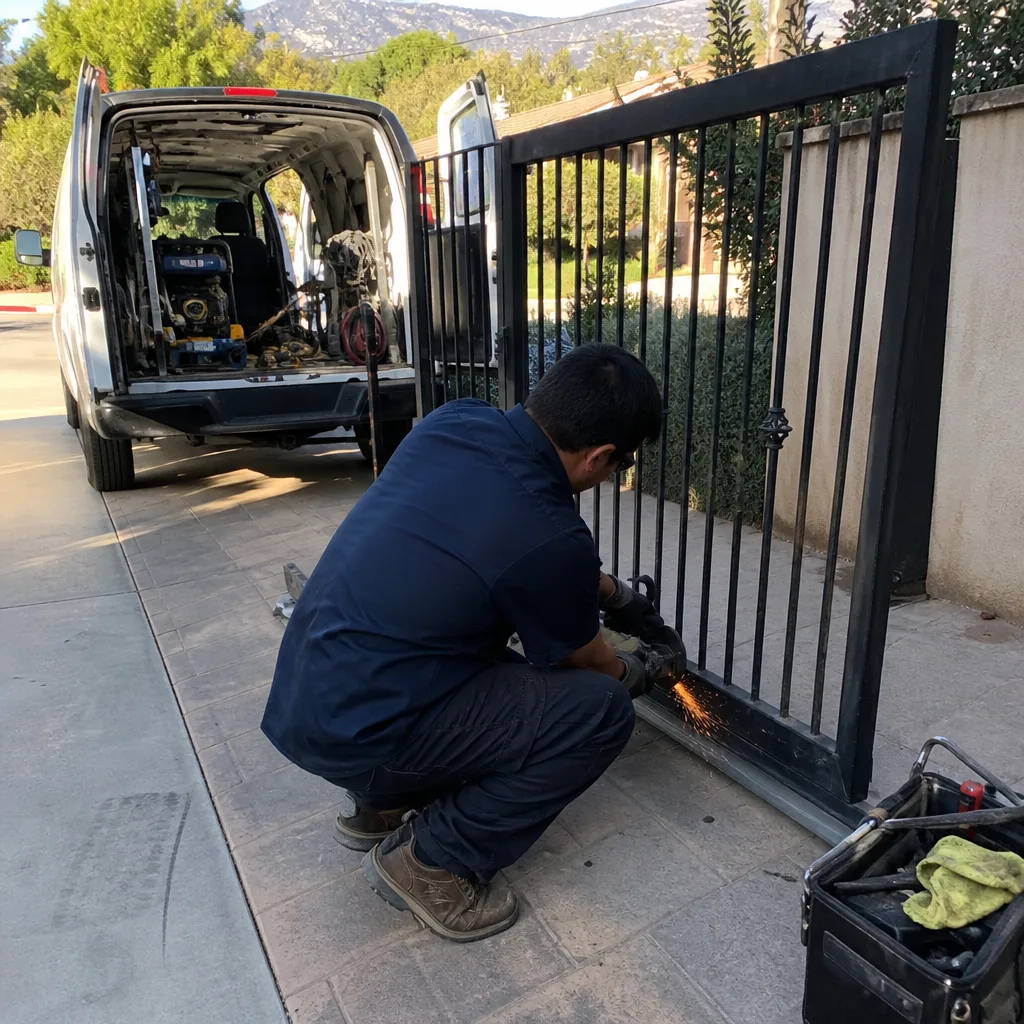
Slide gates dominate flat-lot properties with wide driveways, and they’re the most common gate type in Simi Valley’s newer developments. The failure pattern here is mechanical: rollers develop wear, the track accumulates debris from wind and landscaping, and the chain or belt tension drifts over months. A slide gate that grinds or shudders is usually telling you the roller bearings are dry or the track is misaligned by as little as a quarter inch. These gate failures are rarely electrical; they’re geometry.
Overhead and Vertical Lift Gates
Less common in residential Simi Valley but present on some commercial and light-industrial properties. These systems put more stress on their counterweights and cables, and the safety edges are the component that demands the most attention. We treat every vertical lift gate as a commercial-grade job, which means the same documentation standard applies: photos of the cable condition, the pulley alignment, and the final tension reading.
For property owners considering a new installation rather than another repair, Gate Installation in Simi Valley covers what a properly documented install should include from day one, including slope compensation and solar loading considerations specific to this valley.
What Gate Repair Actually Costs in Simi Valley
We believe in putting dollars on the page. Here’s what we’re quoting in Simi Valley right now, and we’ll tell you what drives the spread. Every one of these prices is written before work starts, and none of them changes at the end of the job unless you approve a change order in writing first.
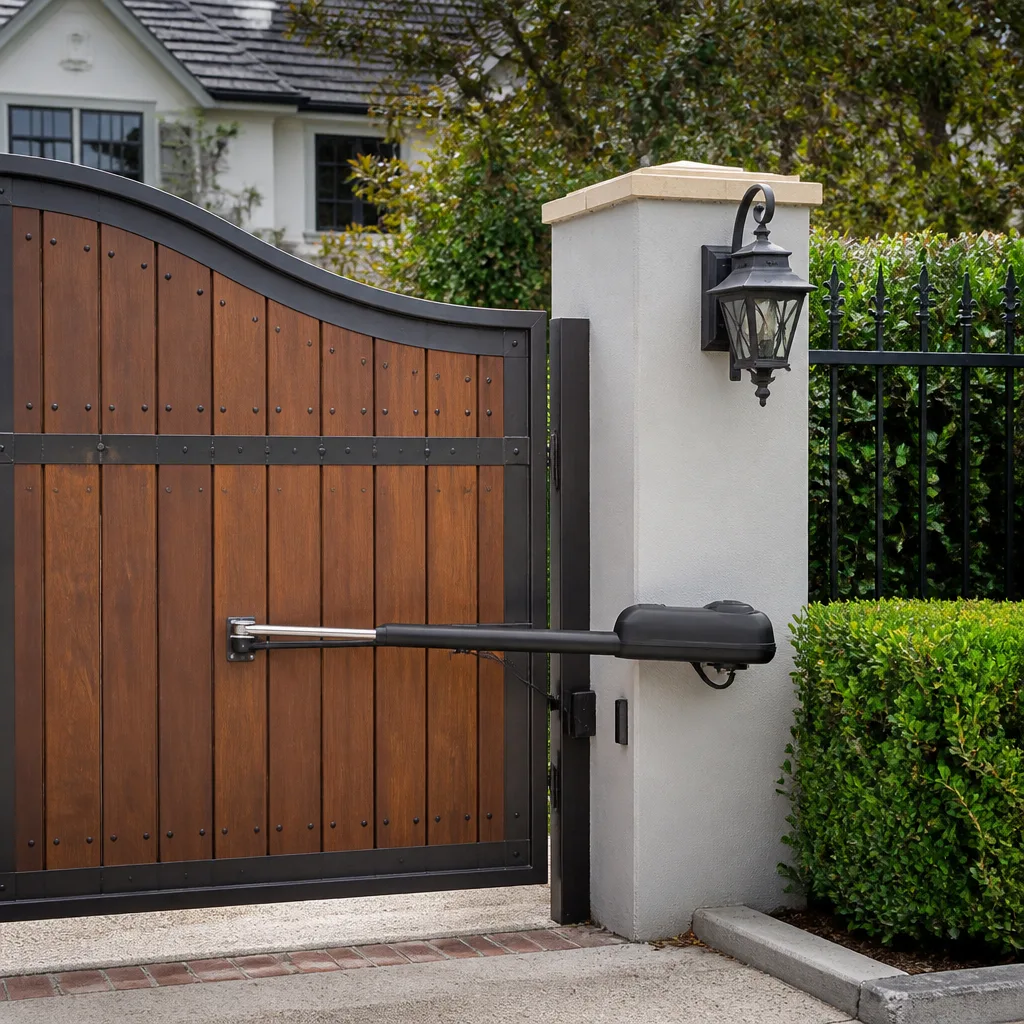
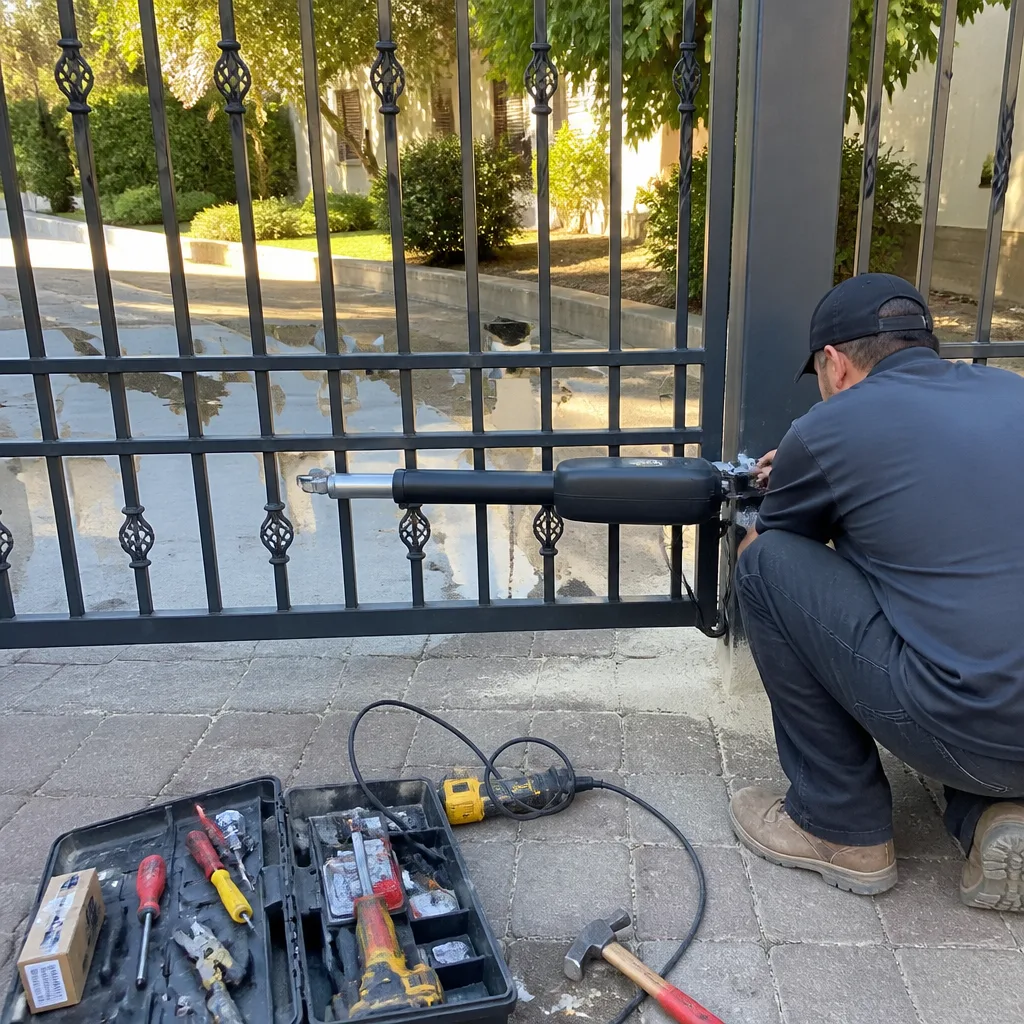
Most swing-gate motor replacements run between $680 and $900, depending on the brand and whether the arm bracket is intact. If the bracket is bent or the hinge weld is starting to crack, that’s an additional $120 to $180 for the bracket and weld repair. A limit-switch reset, which is one of the most common single repairs we perform, runs $140 to $180, including testing and the photographed documentation of the new switch position.
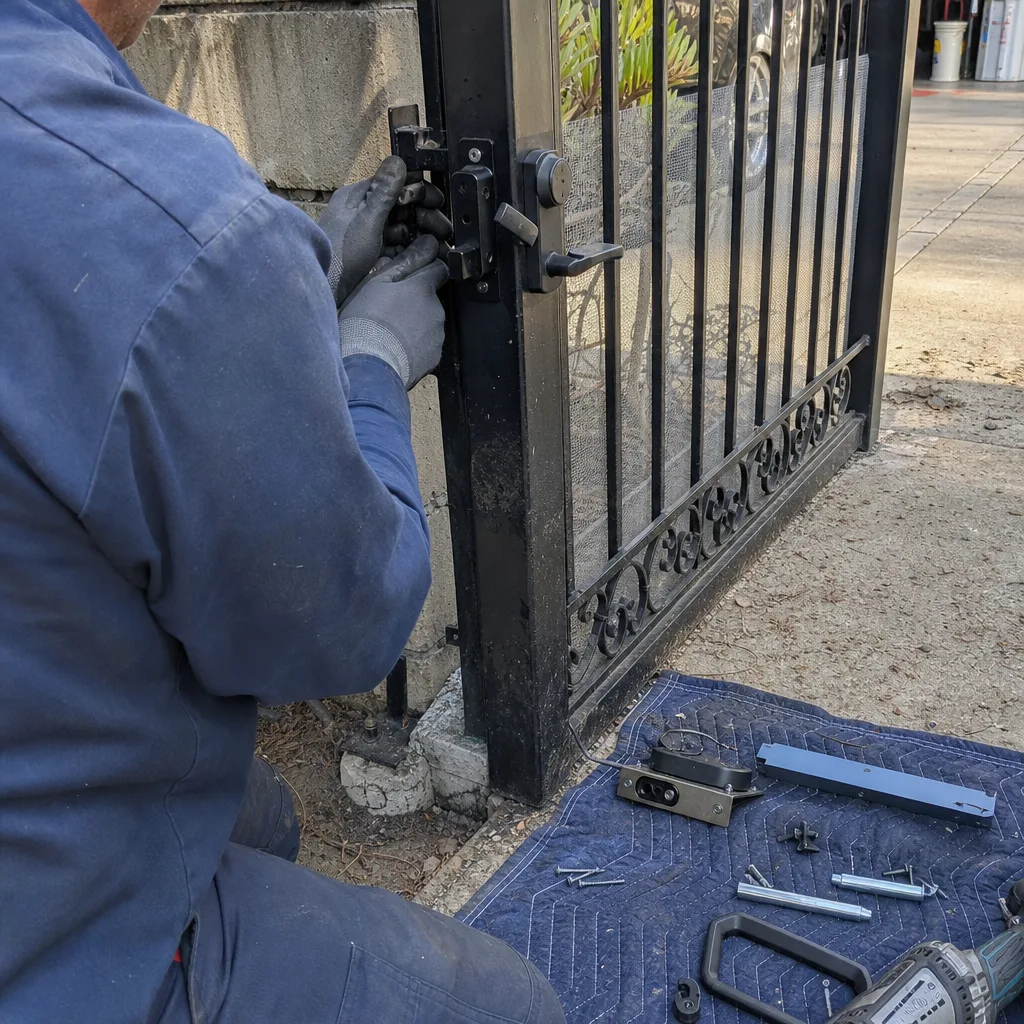
Photo-eye alignment (the infrared beam that stops the gate if something crosses the path) is typically $110 to $150 when the misalignment is the issue. If the photo-eye itself is dead, replacement runs $180 to $240 including the new sensor and re-aiming. Hinge replacement on a single swing gate runs $260 to $380 depending on the hinge size and whether the gate needs to be lifted off its pins. Dual gate synchronization work typically lands between $200 and $320 when it’s a settings and sensor issue, and higher if a motor is involved.
Slide gate roller replacement runs $180 to $320 depending on the number of rollers and whether the track needs cleaning and realignment in the same visit. Chain or belt tension adjustment is $90 to $140 as a standalone service; a full chain replacement runs $260 to $400. Control board replacement spans from $380 for a basic single-board swap to $600 to $900 when the board is a proprietary DoorKing or FAAC unit that requires reprogramming the entire access system.
The single most useful thing to know before any repair: a gate repair invoice in Simi Valley, from a shop that documents properly, should list each part number, the reading it was set to, and the photograph location. If the invoice only says “gate service call,” you paid for labor with no memory.
The Documentation a Complete Repair Should Produce
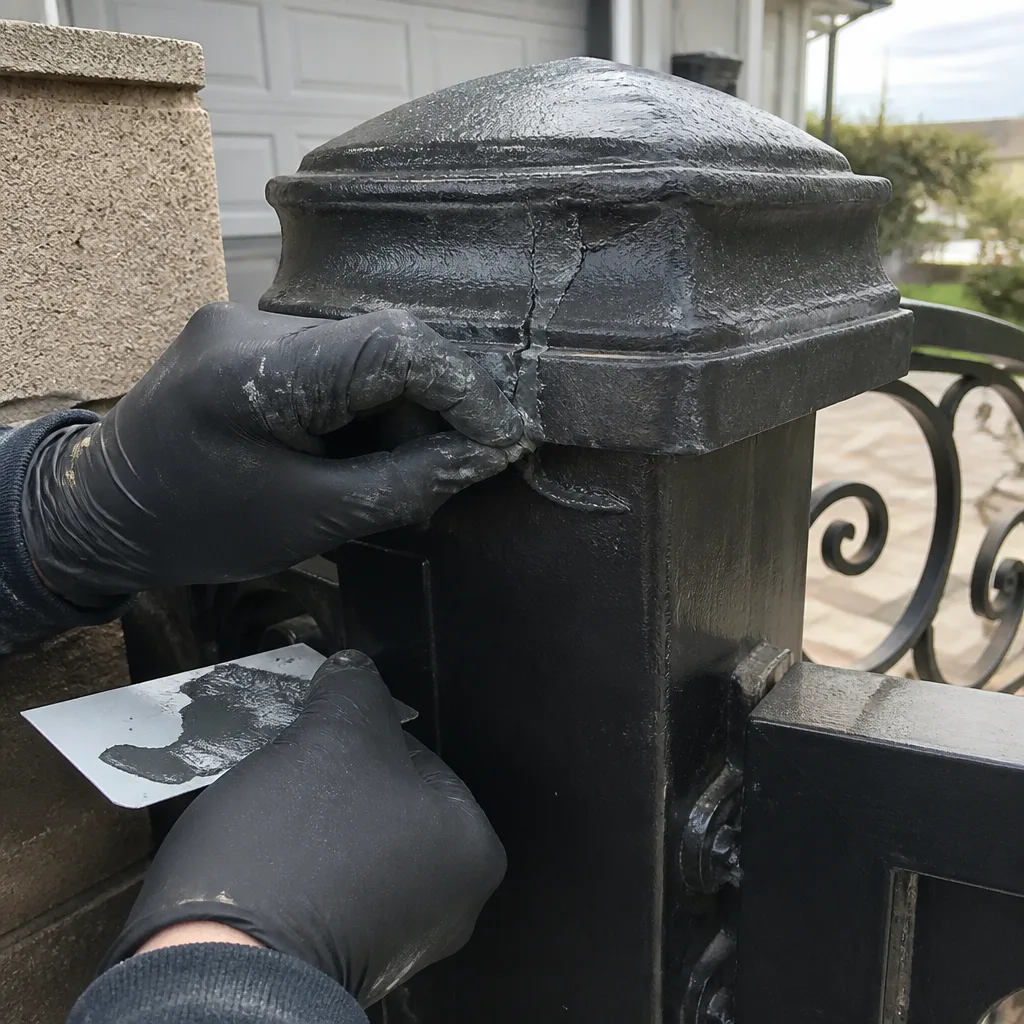
Here’s where we diverge from most of the industry, and we’re explicit about it because we think it’s the difference between a gate that works for a decade and a gate that eats a new motor every eighteen months. A complete gate repair should produce documents, not just a working gate. If you’re paying for a repair, you own the information generated during that repair. Here’s what that looks like:
- The before and after photo log. Every component touched should be photographed twice: as found and as left. This includes the control board with dip switches visible, the limit-switch positions, the photo-eye alignment, the chain tension, and any weld or bracket. In our practice, these photos are date-stamped, labeled, and delivered to you before we leave the driveway.
- The wiring diagram. If any wire was moved, added, or replaced, the diagram should show it. Not a schematic guess, but an actual mark-up of what’s in the box. A future technician should be able to open the cover and match wire colors to your sheet without tracing a single conductor.
- The limit-switch readings. These are the numbers that matter. If the gate was set to open 92 degrees and the switch was clamped at 91.5 degrees, that half-degree matters. Write it down. We photograph the reading on the multimeter and the physical switch position.
- The part serial number and date code. Every motor, board, sensor, and capacitor has a serial number. That number tells you when the part was made, what revision it is, and whether it’s under warranty. If you don’t have it, you can’t file a warranty claim.
- The written price, signed before work starts. Under The Haven Standard, Clause 1 (Have it in writing), the price is agreed and recorded before anyone picks up a tool. No exceptions, no add-ons that weren’t approved by you in writing.
Adrian Vance built this documentation habit during his commercial access-control work starting in 2014. On a commercial site, no facility manager accepts a repair without a work order trail. Residential gates deserve the same rigor, and the absence of it is why homeowners pay twice for the same diagnosis.
Why a Verbal Estimate Is a Structural Problem
A verbal estimate isn’t a price. It’s a mood. And it’s the single most reliable predictor that a repair will end with a number that didn’t exist when the technician arrived. Here’s why.
When a technician gives a price verbally, with no written scope, the door is open for the final invoice to include line items that were never discussed: a “diagnostic fee” that wasn’t mentioned, a “travel charge” that appeared after the fact, a part marked up because “it was harder to get than expected.” None of that is negotiable later, because you already paid it. The verbal estimate was the moment the transaction became unfalsifiable.
A written scope, by contrast, is a contract with reality. It names the fault, names the repair, names the parts, and names the dollar figure. If the final invoice differs, you have the written scope in your hand. That’s leverage. And its existence changes how the technician works. When the technician knows the price is written, they diagnose more carefully, because the written scope is their accountability document too. This is the exact reason The Haven Standard exists. Clause 1 is not a preference. It’s the structural fix for the most common homeowner complaint in our industry.
When you call for gate repair in Simi Valley, pay attention to what happens at first contact. Does the company offer to send a technician with a written quote? Or do they say “we’ll take a look and let you know”? The first is a repair process. The second is a billing process.
The Nine Automation Brands We Service, and Why That Matters
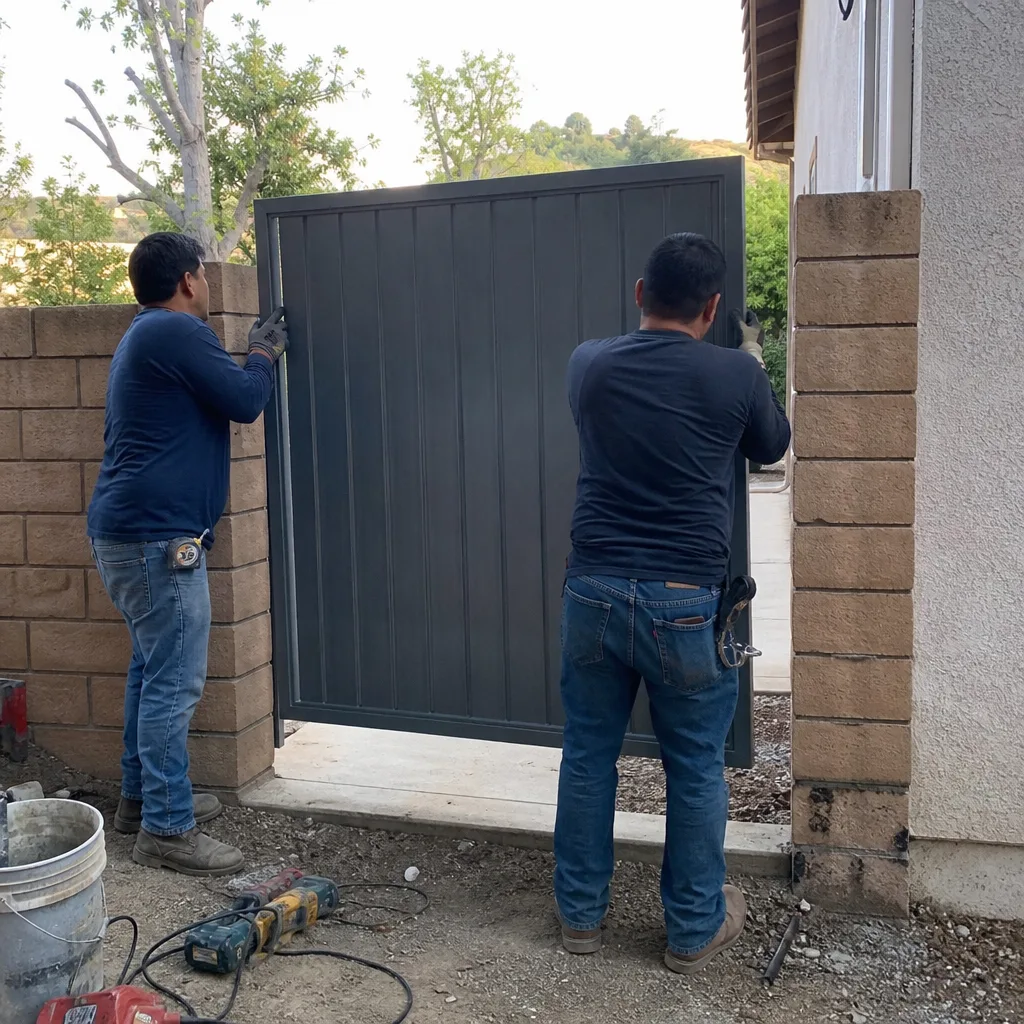
Every gate company has a brand they’re comfortable with, and that comfort often becomes revenue. The company that only installs one brand will inevitably steer every repair conversation toward replacing your existing motor with theirs, regardless of whether the existing motor is repairable. That’s not repair. That’s a sales funnel.
We work on nine automation brands: LiftMaster, FAAC, BFT, Linear, Viking, Ghost Controls, DoorKing, Elite, and Mighty Mule. That range isn’t a marketing point. It’s the practical reality of Simi Valley, where thirty years of development means thirty years of different gate motors are installed across the valley.
Take a common scenario: a homeowner off Wood Ranch has a BFT swing-motor that’s fifteen years old and grinding. Another company, one that only carries LiftMaster, will quote a full replacement: $1,400 to $1,900. We’ll open the BFT gearbox, find the worn gear set, replace it for $300 to $450, photograph the old and new gears, and hand you the part number. The motor runs for another seven years. That’s the difference a multi-brand capability creates.
FAAC motors, common in Simi Valley’s higher-end installations, use hydraulic systems that fail slowly and give warning. Linear and Viking units, more common in commercial and light-industrial gates, use electromechanical actuators with limit switches that drift. Each brand has a failure personality, and knowing nine personalities means we can diagnose from the symptom instead of the parts catalog.
How to Use Your Repair Record as Leverage
The repair record you get back from a properly documented job has three lives beyond the day it’s created. Here’s how to use each one.
With Future Technicians
This one is straightforward. When the next technician arrives, you hand them the photo log, the wiring diagram, and the limit-switch readings from the last repair. They don’t re-diagnose from scratch. They start from the last known state. That saves you at least one service hour, and it prevents the most expensive failure pattern in gate repair: a technician who “fixes” the wrong thing because they couldn’t see the previous work.
With Insurance Adjusters
If your gate is damaged in a vehicle strike, a storm, or a power surge, your claim gets stronger with documentation. The adjuster can see what condition the gate was in before the event, what parts were installed, and what those parts cost. A repair record turns a vague claim into an itemized one. We’ve seen insurers move faster and pay more accurately when the homeowner can produce a photo log and part list.
With Home Buyers
A gate with a documented repair history is a gate a buyer can trust. It says the property was maintained by someone who cared enough to write things down. If you’re selling a Simi Valley home with a gate, the repair record belongs in the disclosure packet. It answers the buyer’s implicit question before they ask it: what else has been neglected?
For motor and opener issues specifically, including what documentation looks like on a motor replacement, see Gate Motor & Opener in Simi Valley.
Common Mistakes to Avoid
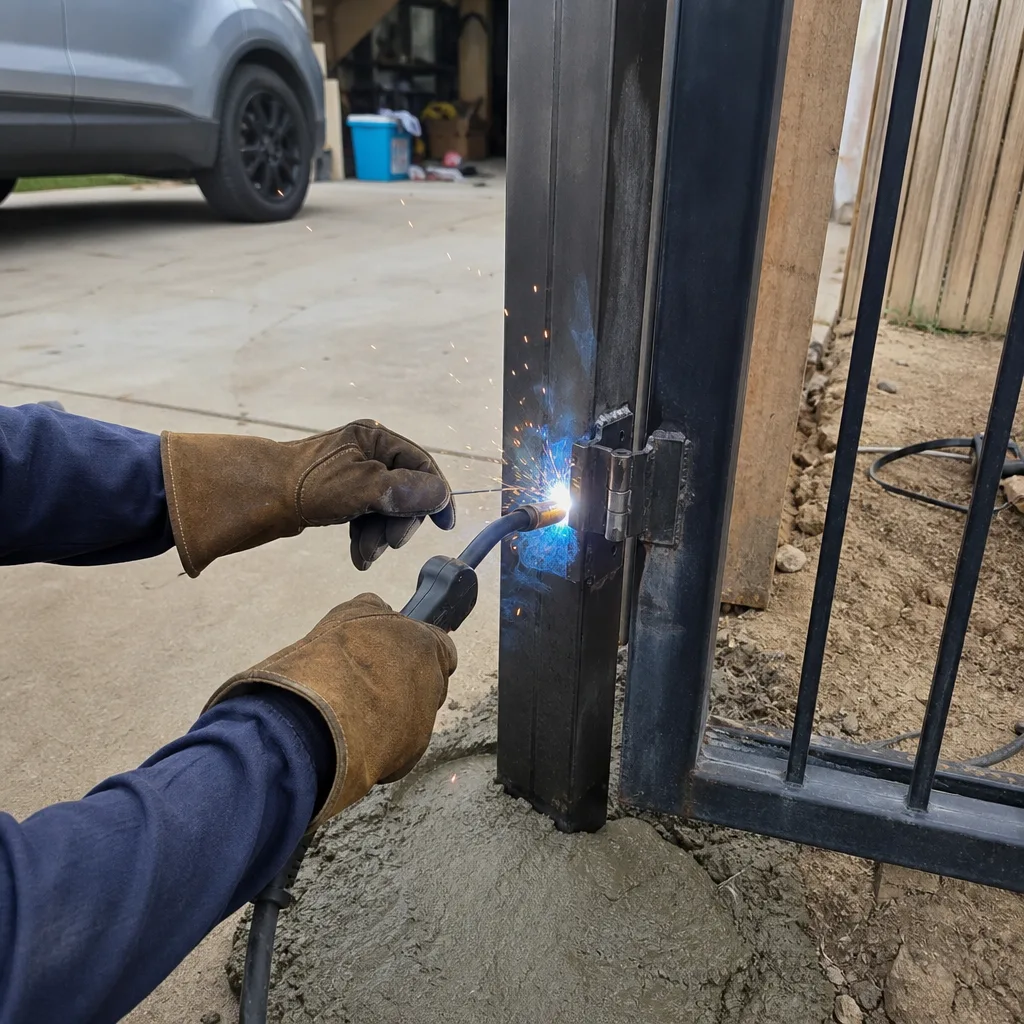
- Accepting a verbal estimate with no written scope. This is the root mistake that makes every other problem possible. If the price isn’t written, the price isn’t real. Demand it in writing before any work begins.
- Replacing a repairable motor because a company only services one brand. In Simi Valley, where BFT, FAAC, and LiftMaster motors are all common, a single-brand shop will often push replacement over repair. Get a second opinion from a shop that works on what’s already on your property.
- Ignoring a grinding sound because the gate still opens. A grind is a warning. The gear or roller that’s grinding today is the failure you’ll pay for in six months, and the failure will cost more because the damage has spread.
- Not requesting the limit-switch readings after a repair. If no one wrote down the switch settings, the next technician has to re-diagnose from zero. You’re paying for the same knowledge twice.
- Letting a photo-eye stay misaligned because the gate bounces back instead of holding open. That misalignment is a symptom with a specific fix. Waiting turns a $120 alignment into a sensor replacement when the sun finally kills the weakened unit.
- Scheduling repair during the hottest part of a Simi Valley summer day and expecting the board to cool down afterward. The board has been baking all afternoon. Diagnosis happens on a heat-soaked part that’s performing differently than it will at 8 p.m. It’s a variable worth accounting for.
- Throwing away the previous repair invoice because “that was the old company’s work.” That invoice is the only record of what was installed and when. Keep it with the property documents.
When to Call a Professional
A gate that makes noise, hesitates, reverses without reason, or trips a breaker is a gate that needs eyes on it. The danger cases are specific: any high-tension component (springs, counterweights, and cables on vertical or overhead gates) should never be adjusted by a homeowner, and any electrical work inside a control box with live line voltage is not a weekend project. These systems carry enough stored energy to cause serious injury, and a gate panel with 120V or 240V service is not the place to learn. If your gate is on a slope, if your opener is older than ten years, or if a safety edge or photo-eye isn’t working, call someone who documents what they find. Vance Gate Repair Simi Valley offers free estimates in Simi Valley and has a live person answering the phone 24/7. Call (805) 516-0479 any hour.
Frequently Asked Questions
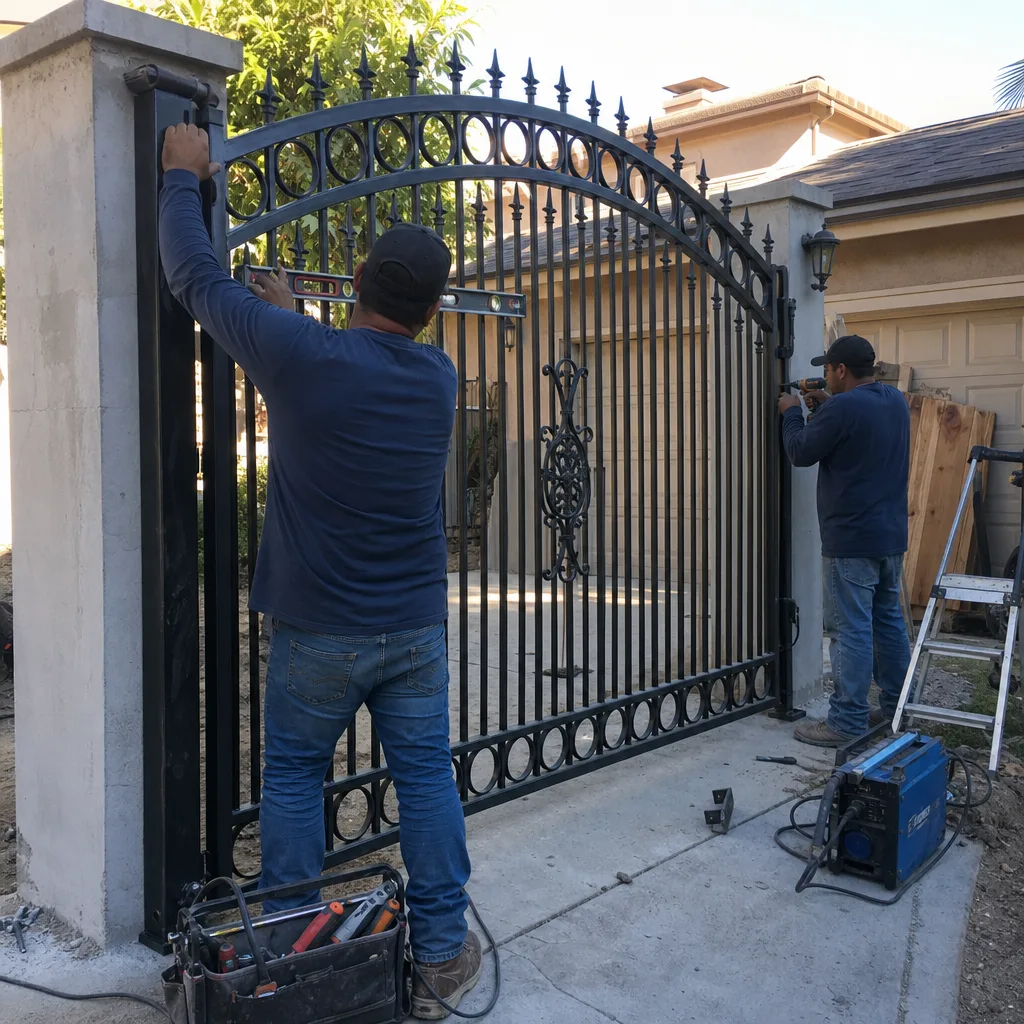
Most gate repairs in Simi Valley run between $140 and $900 depending on the fault. Common fixes like limit-switch resets, photo-eye alignment, and roller replacement land in the $140 to $320 range, while motor and control-board replacements run $380 to $900. You should always receive a written price before any work starts. Call (805) 516-0479 for an exact quote, written before anyone picks up a tool.
Most common gate repairs, including limit-switch resets, photo-eye alignment, and roller service, can be completed the same day we arrive in Simi Valley. Motor and board replacements may require a second visit if a proprietary part isn’t in the truck. Call (805) 516-0479 and you’ll reach a live person who can tell you what’s possible today.
The two most common gate failures we document in Simi Valley are hinge wear on single swing gates and photo-eye misalignment on automated gates. The heat cycling in this valley accelerates hinge loosening, and direct afternoon sun causes photo-eye housings to shift slightly over time. Both are repairable for under $300 in most cases.
Yes. We repair slide gates, swing gates, dual swing gates, overhead gates, and vertical lift gates across Simi Valley. The diagnosis starts with what type of gate you have and what it’s doing. We work on every configuration this valley’s neighborhoods throw at us, from flat-lot slide gates in newer developments to hillside swing gates on older lots.
After a complete gate repair, you should receive a photo log of every component touched (before and after), the limit-switch readings, the part serial numbers, and a written price agreed before the work began. If your invoice only says “service call,” you didn’t receive documentation; you received a receipt. Ask for the record. Call (805) 516-0479 for a repair that includes the documentation as standard practice.
We service nine automation brands in Simi Valley: LiftMaster, FAAC, BFT, Linear, Viking, Ghost Controls, DoorKing, Elite, and Mighty Mule. We repair the motor already on your property rather than steering you toward a replacement brand. If your gate has a FAAC hydraulic motor or a BFT swing actuator, we work on it in place.
The Bottom Line
Gate repair in Simi Valley has a documentation problem, and it’s a problem you can solve on your next call. The gate that fails again in a year is rarely the gate with a broken part; it’s the gate whose last repair is now a mystery. Demand a written price before any work, a photo log of what was found and changed, and the part numbers and switch readings that make the next repair start from knowledge instead of guesswork. That’s the difference between paying for a repair and paying for a repair that lasts. We’re Vance Gate Repair Simi Valley home, and we’ve been documenting repairs this way since 2014. If your gate is acting up, call (805) 516-0479. A live person answers, and the price is written before the work begins.
Written by Adrian Vance, Owner at Vance Gate Repair Simi Valley, serving Simi Valley since 2014.