
Last updated September 20, 2026
Free on-site gate assessment - hinges, posts, and your LiftMaster or Nice gate operator checked before anything is quoted
The assessment is free and the quote is the invoice.

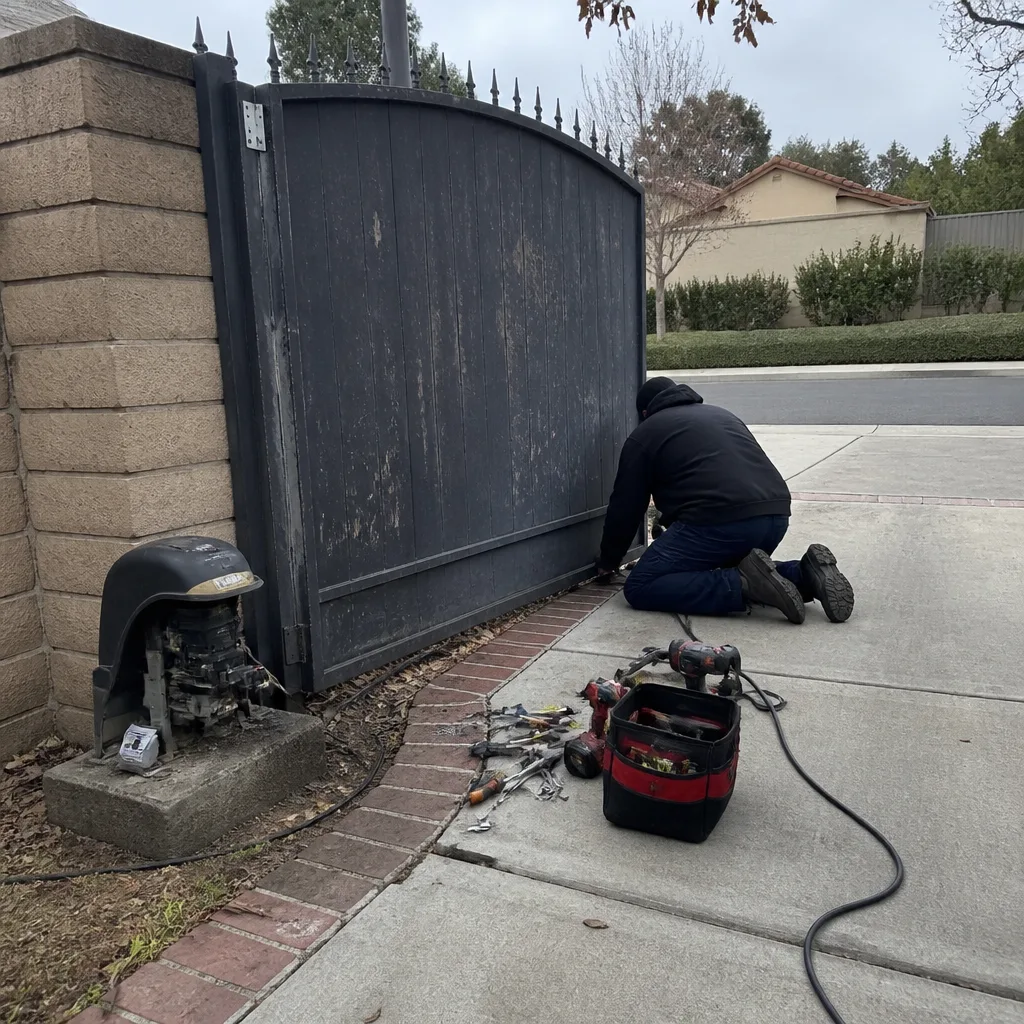 Before
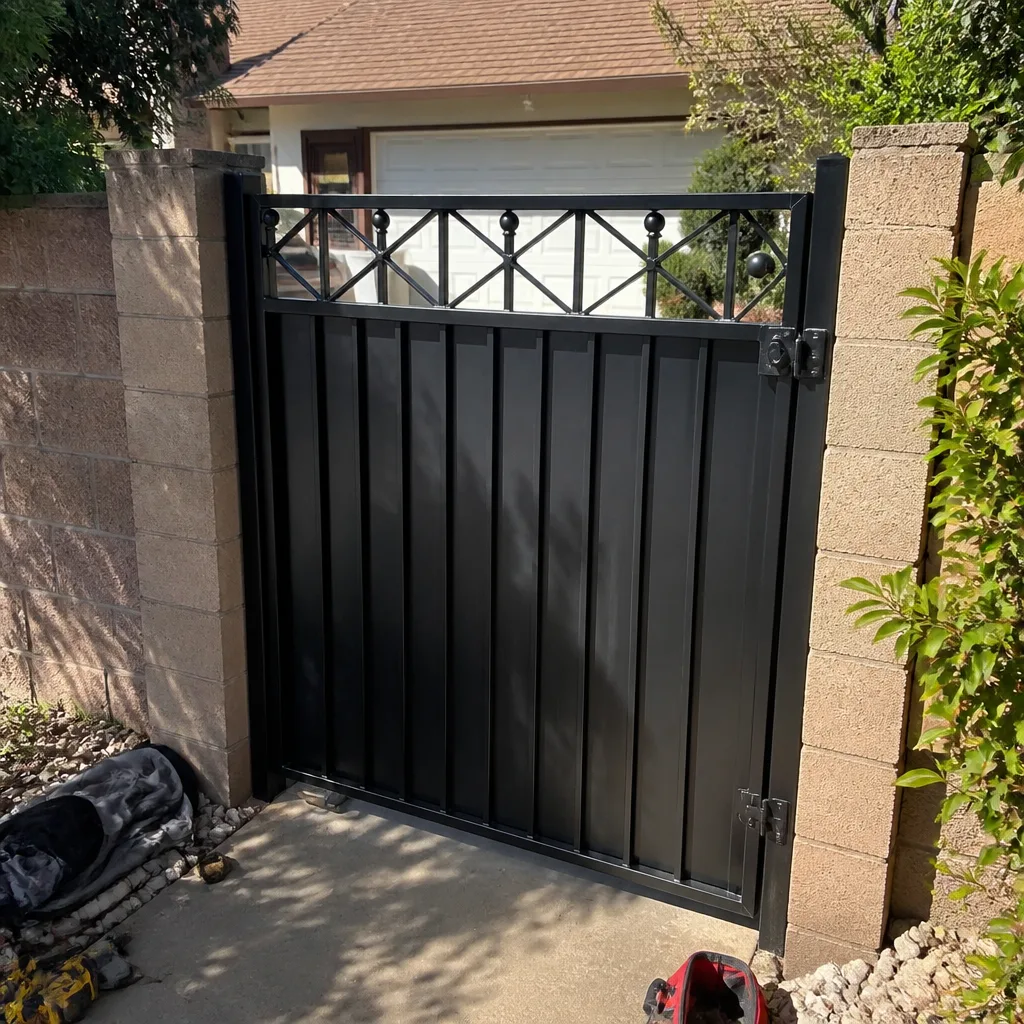 After
After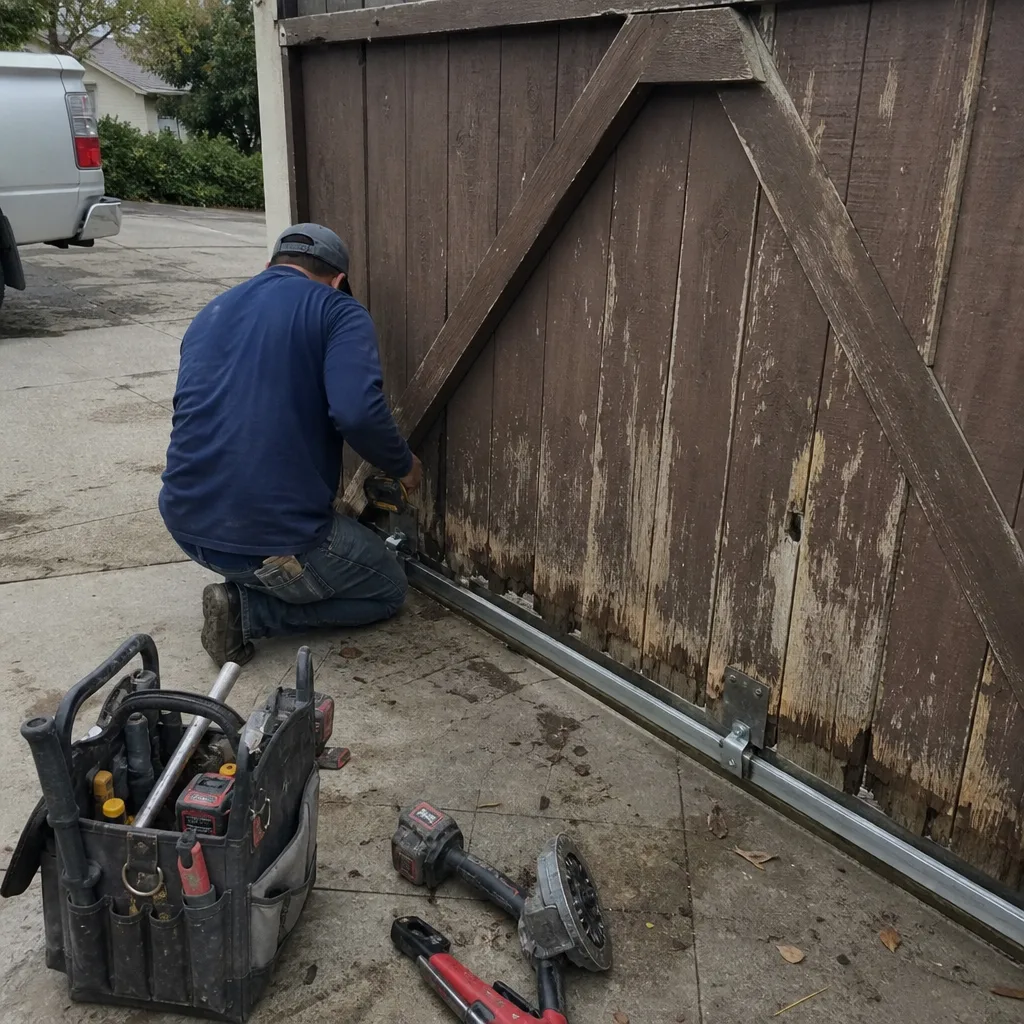 Before
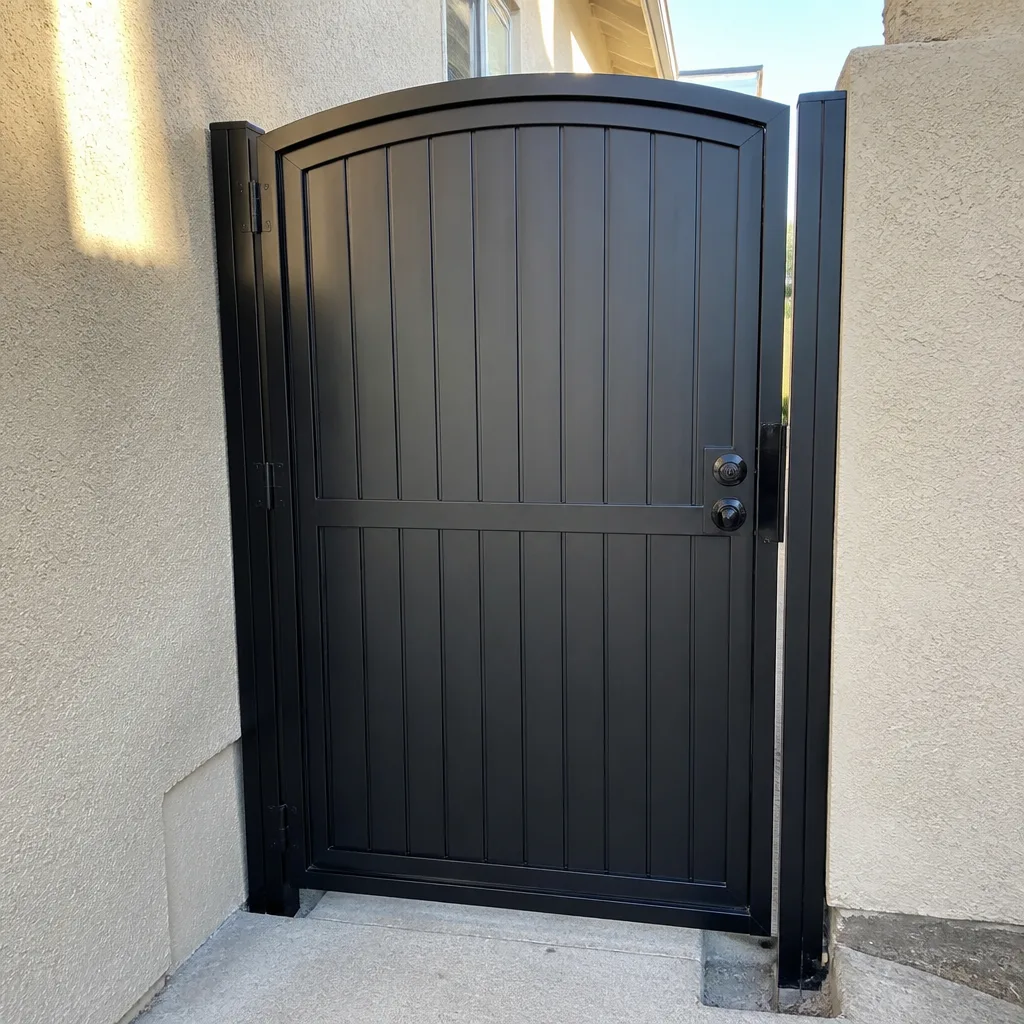 After
After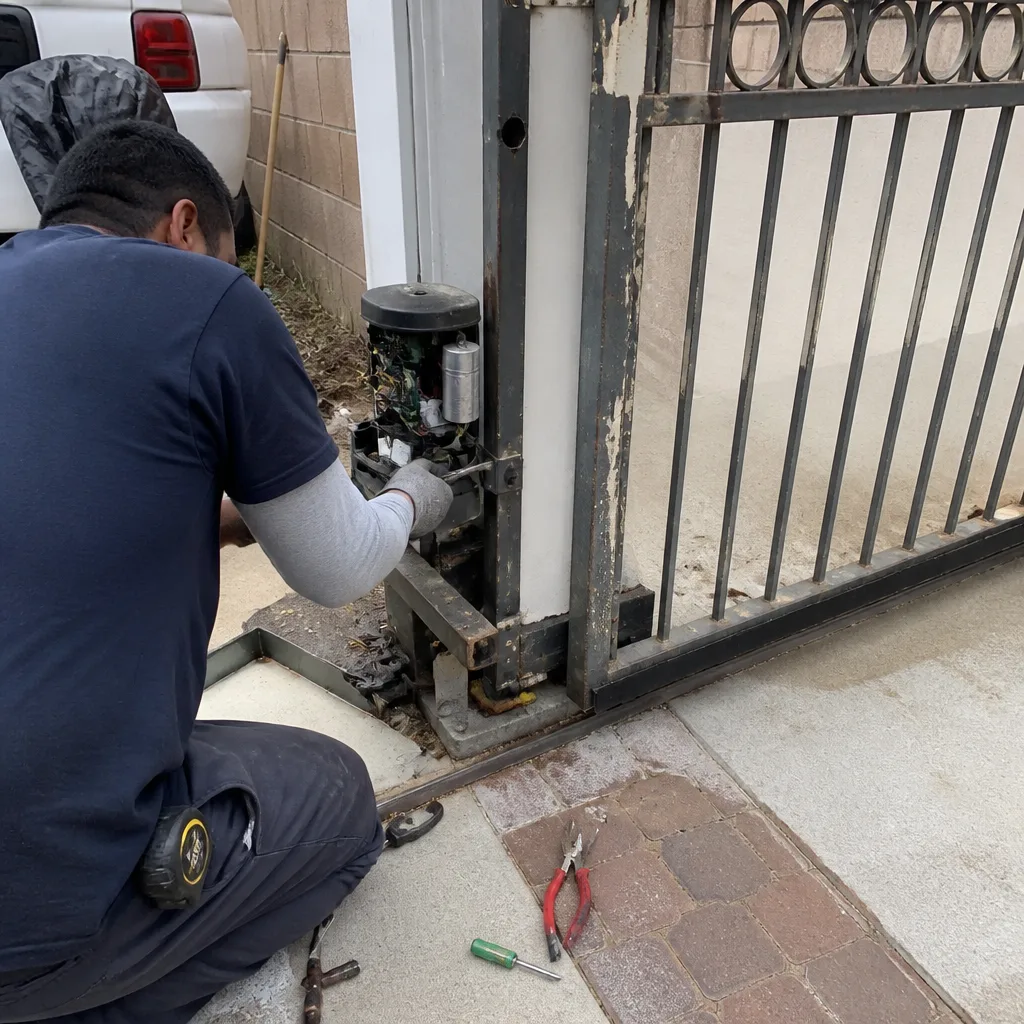 Before
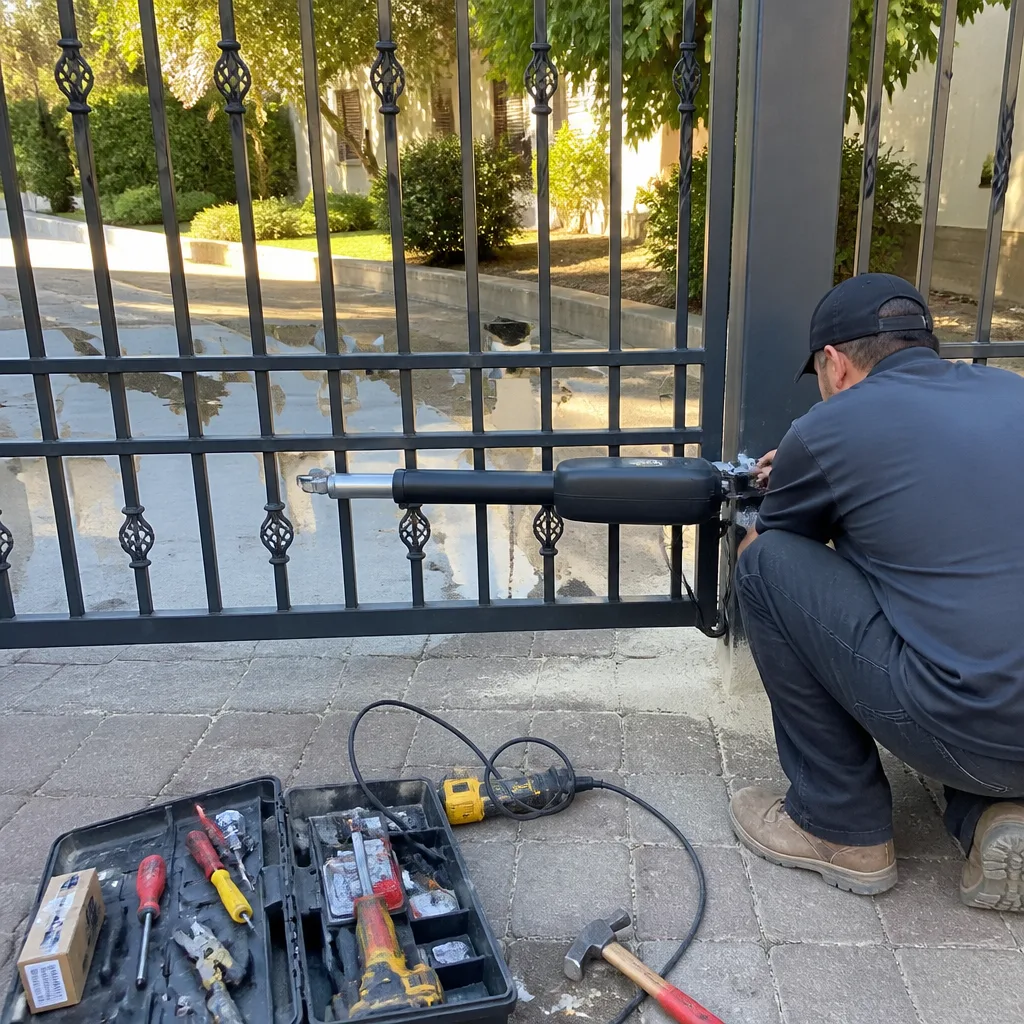 After
AfterSeasonal Gate Repair Care for Simi Valley: Year-Round Homeowner’s Guide
The gate operators most likely to fail in Simi Valley fail in August. Not because of a single hot day, but because three months of 95°F afternoons have been shifting limit-switch positions a sixteenth of an inch per week until the gate reverses before it’s fully open, and the homeowner is stuck on the driveway at 7:15 a.m. wondering why a motor that worked fine in May has suddenly lost its memory. Our Complete Guide to Gate Repair in Simi Valley is what we teach homeowners who want to stop that August morning before it happens. You’ll learn the two stress periods that actually matter here, the five maintenance tasks that prevent most seasonal failures, and how to build a running record of your gate equipment that saves real money when something eventually needs replacing.
Quick Answer
Seasonal gate maintenance in Simi Valley should be scheduled twice a year: once in April before the heat-and-UV window (May through October), and once in October before the wet-and-wind window (November through April). Each window stresses gate equipment differently, so the tasks differ, and skipping either one is how a functioning gate becomes an emergency call in August or after the first Santa Ana event.
Table of Contents
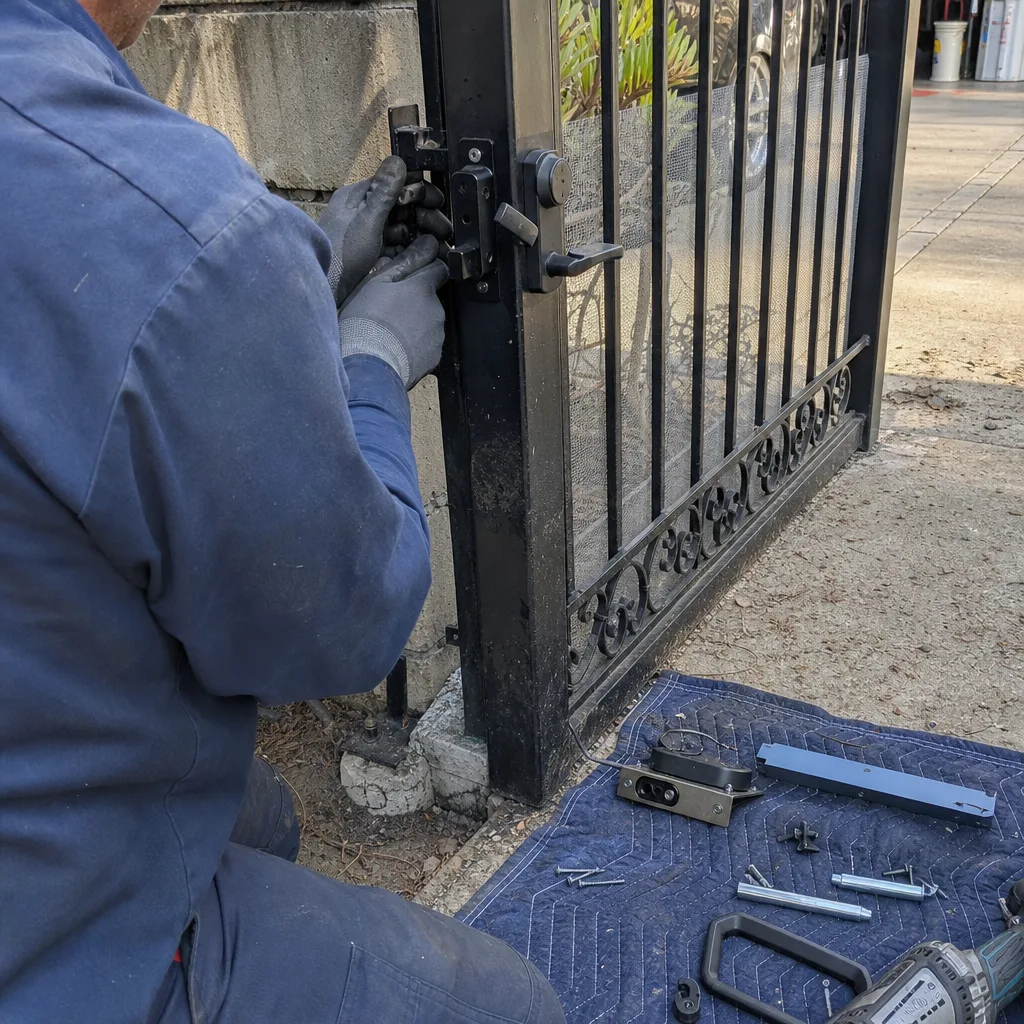
- Why Simi Valley Has Two Stress Periods, Not Four Seasons
- Pre-Heat-Season Maintenance (April): What to Do Before Summer
- Pre-Rain-Season Maintenance (October): What to Do Before Winter
- Santa Ana Wind Events and Your Gate
- Re-Recording Limit Positions After Temperature Swings
- Building a Running Equipment Record
- What Seasonal Gate Maintenance Costs in Simi Valley
- Common Mistakes to Avoid
- When to Call a Professional
- Frequently Asked Questions
- The Bottom Line
BeforeAfterWhy Simi Valley Has Two Stress Periods, Not Four Seasons
Simi Valley sits in a Mediterranean climate zone, which is a polite way of saying the weather here is mostly dry heat for half the year and mostly dry wind for the other half, with rain arriving in short, drenching bursts rather than a long wet season. For gate equipment, the calendar year splits into two meaningful windows.
The heat-and-UV window runs from May through October. Daytime highs in Simi Valley routinely sit between 90°F and 105°F from June through September, and the direct sunlight on a metal gate operator housing will push the internal temperature 30 to 40 degrees above ambient. Inside a control board enclosure, that means components are operating at 130°F to 145°F for hours at a time. Circuit boards expand and contract with each daily cycle. Solder joints flex. Wire insulation gets brittle faster than the manufacturer’s data sheets expect. This is the window where limit switches drift, batteries lose capacity, and capacitors on older boards fail.
The wet-and-wind window runs from November through April. Simi Valley gets most of its roughly 16 inches of annual rainfall between December and March, and the storms that bring it often carry wind gusts strong enough to matter for swing gates. A heavy swing gate in a 40 mph gust is a sail. The operator’s motor, the hinge brackets, and the mounting bolts all take a load the system was not really designed to absorb repeatedly. Meanwhile, any gap in the operator housing seal that was invisible in August becomes a water entry point in January, and water on a control board is a discovery no one wants on a rainy night.
What this means: a quarterly maintenance schedule is not the right tool here. Three of those four visits would be doing summer tasks in winter or winter tasks in summer. Two well-timed visits per year, each targeted at the specific failure modes of the window ahead, does more to prevent breakdowns than the same number of generic “check everything” visits spread across the calendar. This is the schedule we’ve used on gate repair in Simi Valley since Adrian Vance started the company in 2014, and it’s the reason our repeat emergency calls spike in houses that skipped the April visit.
Pre-Heat-Season Maintenance (April): What to Do Before Summer
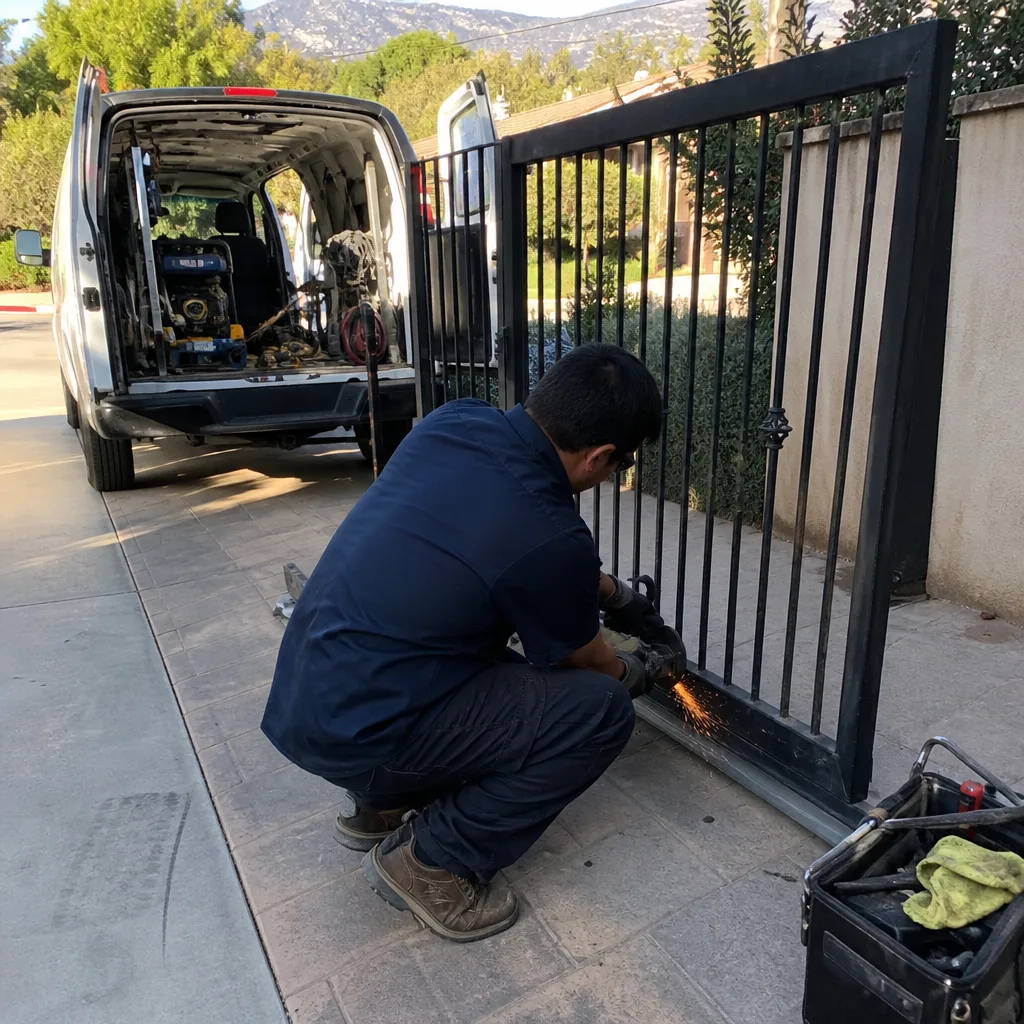
The April visit is about hardening the gate against heat and UV. Every task below targets a specific failure mode that shows up in Simi Valley between June and September, and each one is a documented adjustment, not a vague “inspected and looked fine.” Here is what gets done.
1. Limit-Switch Baseline Readings
A limit switch tells the operator when the gate has finished opening or closing. The setting is a physical position, and when temperature swings of 40 degrees or more happen daily, that position drifts. We record the exact limit-switch setting for both open and closed travel, in degrees past the gate’s mechanical stop, and write that number down. In August, if the gate starts reversing before it opens fully, the first thing we check is whether the current setting has drifted from the April baseline. In Simi Valley, we routinely see drift of 2 to 4 degrees over a single summer on gates that were not re-adjusted in April. On a 16-foot swing gate, 2 degrees at the operator arm is enough to cause a reversal at the top of the arc.
2. Control Board Housing Inspection
The control board is the brain of the operator, and heat kills brains. The housing that protects it needs to have its access seal intact, its vent screens clear of spider webs and dust, and no sign that the enclosure has been distorting from sun exposure. We photograph the board and its housing. If the housing sits on a west-facing wall that gets direct afternoon sun, we note that in the record and, if needed, recommend a shade solution. In our experience with Sunset Hills and Wood Ranch homes with west-facing gates, control boards in fully exposed housings fail at roughly twice the rate of shaded or shielded installations.
3. Battery Backup Capacity Test
Most gate operators with battery backup use a sealed lead-acid battery that loses capacity every year, especially in heat. The test is simple: disconnect from line power, run the gate open and closed, and measure how many full cycles it completes before the battery voltage sags. Write the number down. Next April, test again. When the cycle count drops, you replace the battery before an actual power outage finds out for you. Heat is the battery’s enemy: in Simi Valley’s summer, a battery that would last four years in a coastal climate often lasts two and a half.
4. Lubrication at Hinges and Rollers
Heat thins lubricants. By July, a hinge that was greased in April is running on whatever fraction of that grease has not cooked off or dripped onto the driveway. We use a high-temperature lithium grease on hinge pins and a dry silicone spray on the track rollers of slide gates. The goal in April is to get enough lubricant into the load-bearing surfaces that the August heat doesn’t leave metal running on metal. For slide gates, we also clear the track of any accumulated dust and check that the guide rollers are making contact, not floating.
5. Photo-Eye Alignment Check
A photo-eye, the infrared beam that stops the gate if something crosses the path, can be knocked out of alignment by heat expansion alone. On a long driveway with a black-topped surface, reflected heat creates a shimmer that can false-trigger a marginally aligned beam. We check the alignment at both ends of the gate’s travel and set the beam path so there’s clean margin. Misalignment that’s off by two inches in April becomes six inches of drift by August after months of thermal cycling. When a Simi Valley homeowner calls us because the gate stops halfway and reverses, the photo-eye is the cause more than half the time.
If you’re handling some of this yourself, our DIY vs Professional Gate Repair guide can help you decide how far to take it; either way, the limit-switch baseline and the battery test are the two tasks that pay back the most in August. Everything on this list should be done before the first 90°F day, which in Simi Valley is usually within the first two weeks of May, sometimes earlier.
Pre-Rain-Season Maintenance (October): What to Do Before Winter
The October visit targets water ingress, corrosion, and drainage. Rain in Simi Valley arrives in concentrated storms, often after months of dry weather that has allowed dust, leaf litter, and small debris to accumulate in every crevice of a gate system. That debris becomes mud, and mud clogs. The tasks here are mostly prevention.
1. Operator Housing Seal Inspection
The rubber or foam gasket around the operator housing access door is the only thing standing between a winter storm and the control board. Dry heat has already been working on that gasket for six months. We open the housing, check the seal for flattening or cracking, and replace it if it no longer compresses fully against the door. On a gate in central Simi Valley exposed to full sun, we have seen seals fail in a single season. Inside the housing, we also check for signs that moisture has already entered, such as corrosion on terminal screws or rust bloom on the transformer lamination.
2. Corrosion Check on Exposed Hardware
Simi Valley is not a coastal salt environment, but it is a dry-then-wet environment, and that cycle promotes corrosion in a different way. Bolts and brackets that have been baked in dry heat develop microscopic surface oxidation. When winter moisture arrives, that oxidation accelerates into visible rust. We inspect the mounting bolts, hinge brackets, the operator arm attachment, and every exposed fastener. Any bolt showing significant rust gets replaced and coated. This is not cosmetic: a rust-weakened bolt on a 300-pound swing gate is the difference between holding and failing in a wind gust.
3. Drainage Clearance at Slide Gate Tracks
Slide gate tracks in Simi Valley fill with a specific cocktail: decomposed granite from driveways and yards, fine dust from months of dry weather, and leaf litter from oak trees. When the first real rain comes, that dust turns into a slurry that sets like grout. We clear the full track length with a stiff brush, clean the drain holes at the low points, and check that the track’s cross-slope still drains to one side. A track that holds standing water is a track that will eventually bind the gate or rust the wheels.
4. Wind-Load Reinforcement Check
This is the other reason to be on site in October. The October through April window includes the Santa Ana season and the strongest frontal winds. We check the gate’s hinge play, the operator bracket, and the closed-position stop. If a swing gate has developed slop in the hinge over the summer, the winter wind will find it and work it larger with every gust. Fixing hinge play in October is cheap. In January, when the gate is flapping in a 50 mph gust, the same fix is an emergency.
5. Weatherstrip and Low-Voltage Wire Check
Lot of gates in Simi Valley have low-voltage wiring run through conduit that crosses a driveway or runs along a fence line. We inspect the conduit joints and seals, the bell boxes, and any wire exposed at the operator. Water follows wire into boxes, and water plus 24-volt controls means intermittent, hard-to-diagnose problems. Getting the wire dry and sealed before the rain is a small task that prevents a big one.
For most homeowners, the October visit also gets used as a chance to do any mechanical repairs found in April that were deferred. One visit in early October is enough.
Santa Ana Wind Events and Your Gate
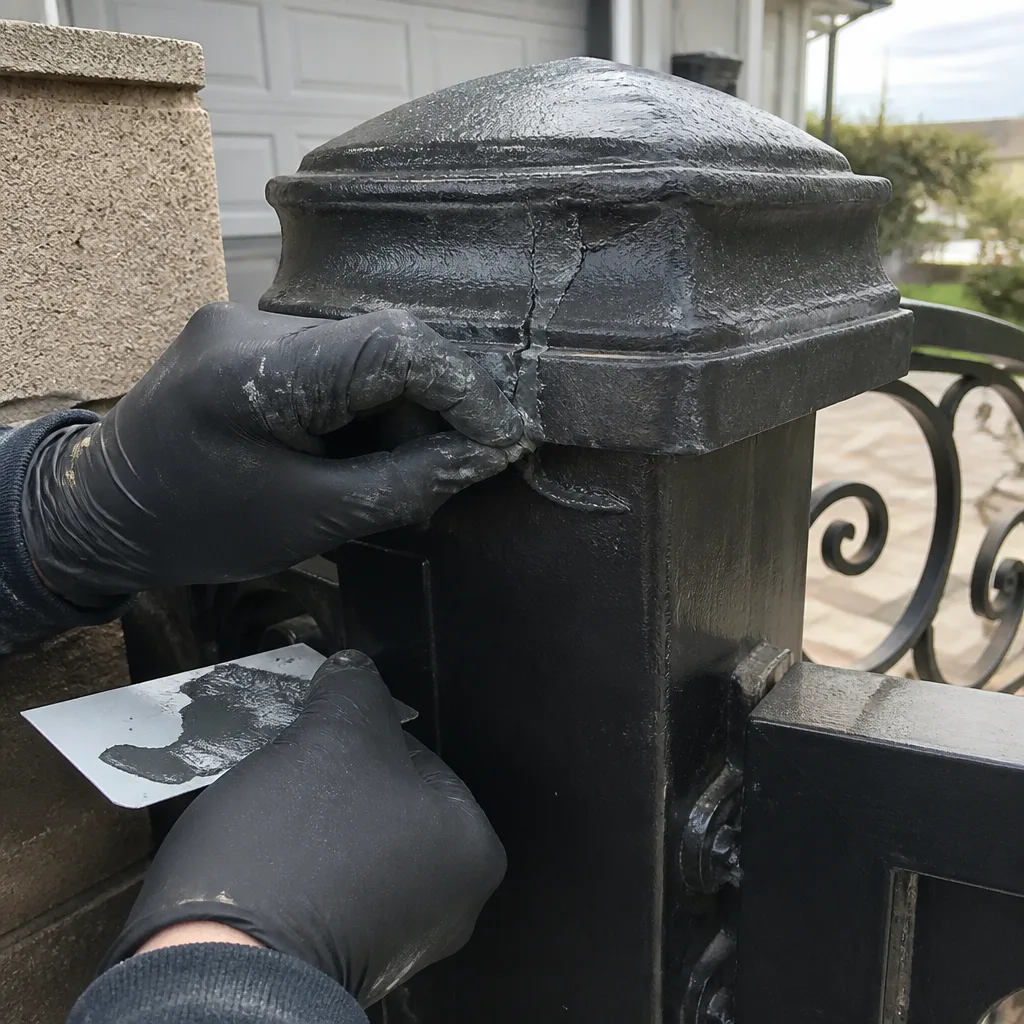
Santa Ana winds load a swing gate differently from normal weather, and understanding the difference tells you what to inspect after a significant event.
Normal wind in Simi Valley arrives from the west or southwest, off the ocean. It hits the gate’s face, pushes it into or away from its closed position, and the operator resists through the gear reduction. The load is predictable. Santa Ana winds, by contrast, arrive from the northeast, down the passes. They are gusty and turbulent, not steady, and the gusts hit the gate from an angle that twists the panel around its vertical axis rather than pushing it cleanly along the travel arc. That twisting loads the hinge pins unevenly, flexes the frame, and works the operator’s attachment bracket in a plane it wasn’t designed for.
After any Santa Ana event with gusts over 40 mph, walk the gate through a full open-close cycle and listen. A change in sound at a specific point in the travel usually means hinge wear or frame flex. Then put a hand on the gate panel and try to move it laterally while it’s stopped mid-travel: any sideways movement that wasn’t there before means hinge pins or bearings have taken damage. Check the operator bracket bolts for loosening. On slide gates, a Santa Ana event rarely causes sudden damage, but the dust it carries coats the track and rollers in fine grit that accelerates wear, so give the track a clearing after a strong event.
One more thing: Santa Ana events are also when we get calls from people whose gates have started opening or closing on their own. The cause is usually fine dust and static. The dust coats the control board and creates low-resistance paths between terminals; the static from the dry, wind-driven air then triggers a false input. A can of compressed air on the board, and a check of the edge-sensor wiring, typically restores normal function. If that doesn’t do it, the board has likely taken a real hit and should be inspected by a gate motor and opener specialist before it fails entirely.
Re-Recording Limit Positions After Temperature Swings
This is the maintenance task Simi Valley homeowners skip most often, and it’s the one that causes the largest share of our August calls.
Limit positions are the open and closed stopping points the operator memorizes. The operator reaches a position, the limit switch tells it to stop, and it stops. The problem is that everything between the operator and the gate face, the arm, the brackets, the hinges, and the gate frame itself, changes shape with temperature. A 40-degree daily swing from a 55°F night to a 95°F afternoon moves the physical position of the gate’s stopping point relative to the operator by a small but real amount. Over the course of a summer, that small amount accumulates until the operator believes the gate is fully open when it’s still a few inches short, or believes it’s fully closed when there’s a gap.
Here is the step-by-step procedure we follow:
- Run the gate to its current open position and measure the distance from the gate edge to the full-open stop or post.
- If the gate is stopping short, release the operator and manually push the gate to its true full-open position, then re-engage the operator.
- On most residential operators (LiftMaster, Linear, Viking, BFT, Ghost Controls, among others), the limit-setting procedure is in the operator’s manual. It usually involves setting the gate to the position you want, then pressing and holding a limit-set button until the control board confirms with a beep or LED change.
- Record the new setting. Write it down, photograph the limit-switch position if accessible, and store that with the operator’s manual.
- Repeat for the closed position.
If you don’t have the manual, the limit-setting procedure for your specific brand is available from the manufacturer’s support page, or we can walk through it on site. The important thing in Simi Valley is not the procedure itself; it’s the reminder that the limit positions are a seasonal maintenance item, not a set-it-once setting. After any significant temperature swing, meaning the first sustained heat of May or the first cold snap of December, re-check them. Gates that drift and get re-set promptly rarely fail in August. Gates that drift for months and never get re-checked are the emergency calls.
Building a Running Equipment Record
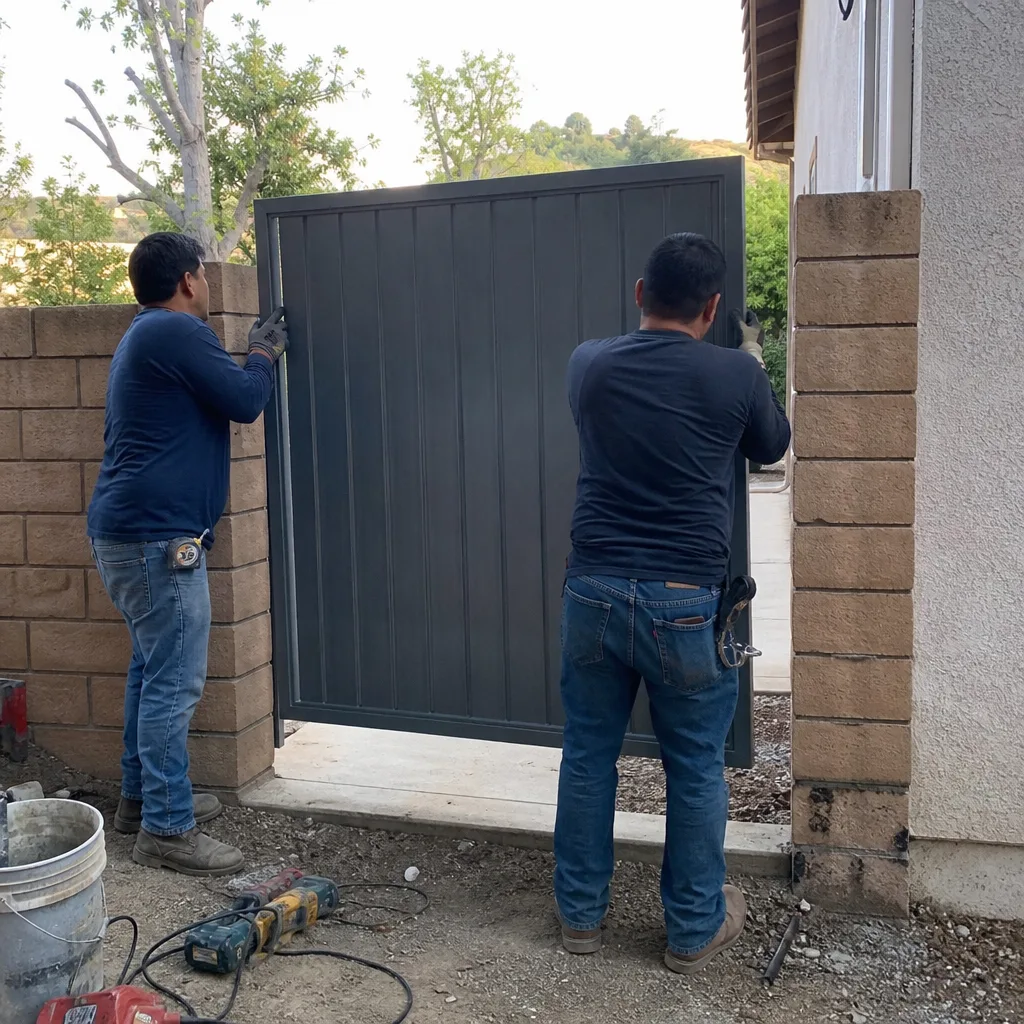
Every gate in Simi Valley has a history, but almost none of them have a record of it. A running equipment record changes that, and it’s one of the cheapest tools a homeowner has for extending operator life and simplifying future repair decisions.
The record is a simple document: date, what was done, what was measured, what was replaced, what was photographed. Here is what belongs in it after every maintenance visit, and the simple version works fine.
- Date and ambient temperature at the time of the visit.
- Limit-switch settings for open and closed, in whatever units your operator uses.
- Battery backup cycle count from the load test.
- Lubrication performed, including the type of grease or spray used.
- Parts replaced, with part numbers and the brand.
- Measurements: hinge play, track alignment, gate panel gaps.
- Photo log of the board, the housing, the brackets, and any parts replaced.
Three things make this record worth keeping. First, when something fails, the record tells the technician what changed and when. A limit setting recorded in April tells the August repair what the baseline was, which makes the diagnosis faster and prevents guesswork. Second, the record extends equipment life: a technician who sees that the battery has lost 30 percent of its capacity in nine months knows it needs replacing before it fails, not after. Third, the record simplifies replacement planning. When an operator eventually can’t be repaired, the record tells you exactly what’s there: brand, model, year, what’s been replaced, and what the failure pattern has been. That’s the difference between a replacement that gets quoted in one visit and a replacement that requires a diagnostic first.
This is the same documentation habit Adrian Vance built in commercial access-control work before bringing it to residential gates in 2014. It’s the foundation of how we handle gate installation in Simi Valley and it’s part of what we leave behind at every visit: a written record and a photo log, so no future technician has to guess, and no homeowner pays twice to rediscover the same problem.
What Seasonal Gate Maintenance Costs in Simi Valley
Cost transparency matters, and here is the range we see in Simi Valley for seasonal maintenance work, based on what the gate actually needs.
| Service | Typical Range in Simi Valley | What’s Included |
|---|---|---|
| Seasonal maintenance visit (labor) | $120 - $220 | Inspection, limit check, lubrication, photo-eye alignment, record update. |
| Battery backup replacement | $80 - $180 | New sealed battery, installation, load test, disposal of old battery. |
| Limit-switch re-setting (standalone) | $75 - $140 | Open and closed travel re-set, test cycle, photographed settings. |
| Operator housing seal replacement | $40 - $90 | Seal material and installation. |
| Slide-track clearing and drainage check | $60 - $120 | Track clean-out, drain hole clearing, cross-slope check. |
| Photo-eye replacement (if alignment doesn’t fix it) | $100 - $190 | New photo-eye pair, installation, alignment, test. |
These are the flat rates we quote in writing before work starts. When a job needs more, such as hinge repairs or bracket replacement, the additional work is priced separately and you see the number on the page before it’s approved. Under Clause 1 of The Haven Standard, the written price comes first, always. With our 365-Day Done Right Promise, if something we did on a seasonal visit isn’t right, we fix it within a year at no charge. No argument, no fee.
For a free estimate in Simi Valley, call (805) 516-0479.
Common Mistakes to Avoid
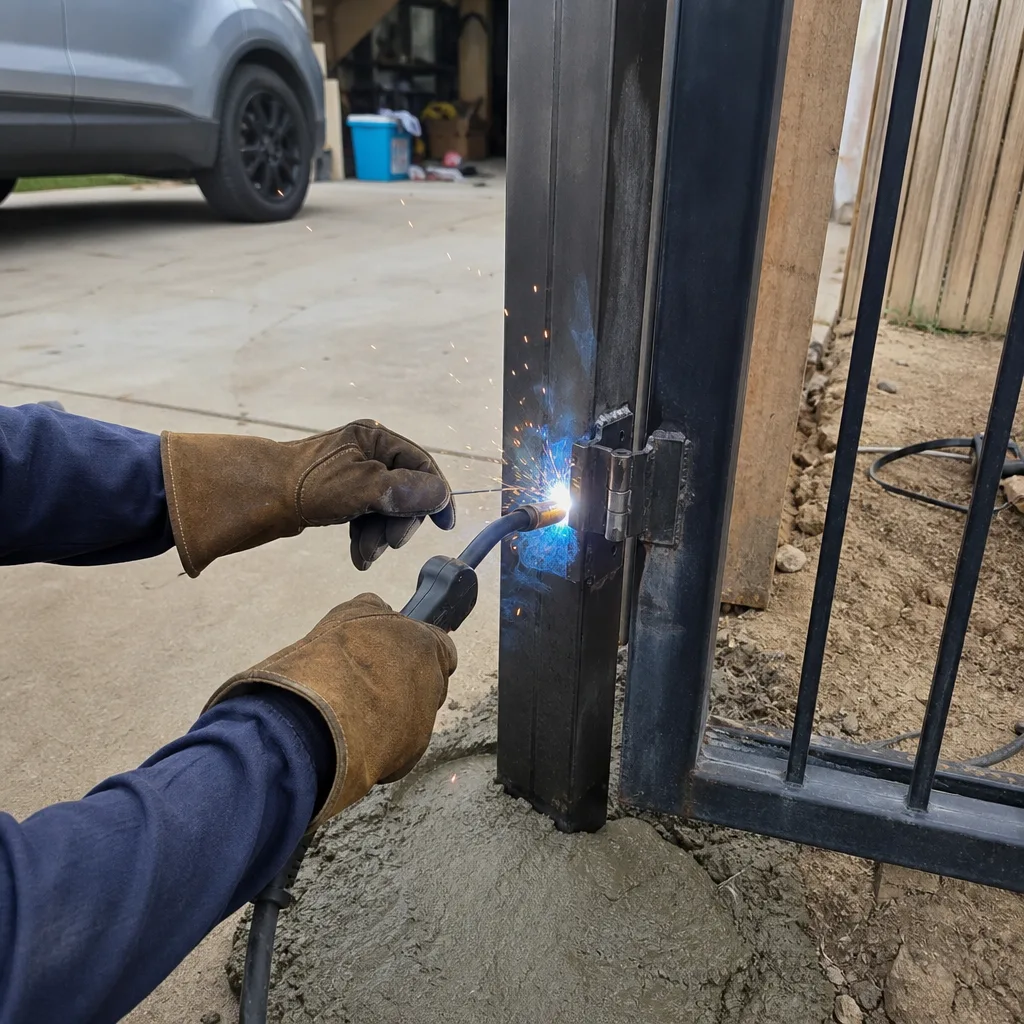
- Skipping the April limit-switch baseline because “it’s working fine.” This is the single most expensive omission we see in Simi Valley. A gate that’s working fine in April is a gate that’s accumulating drift silently, and the August failure costs more than the April adjustment would have.
- Scheduling maintenance quarterly on a generic schedule. Four generic visits a year spend time on irrelevant tasks and miss the two targeted windows where Simi Valley’s climate actually stresses the equipment.
- Ignoring a misaligned photo-eye because the gate still opens. A photo-eye that’s out of alignment “just a little” will trip intermittently, and intermittent problems are the most expensive to diagnose. Alignment is a two-minute fix; diagnosis is an hour.
- Lubricating with WD-40 or a general-purpose spray. It displaces moisture but doesn’t provide the load-bearing film that a high-temperature lithium grease does. By August, a WD-40-lubricated hinge in Simi Valley is running dry and wearing.
- Not clearing the slide-track after Santa Ana events. The grit that coats a track during a Santa Ana event acts like fine sandpaper on the rollers and guide wheels. One cleanup after a strong event prevents months of accelerated wear.
- Replacing a battery backup on a fixed calendar schedule instead of testing it. In Simi Valley’s heat, a battery can fail in two years or last five. The cycle-count test tells you the truth; the calendar doesn’t.
- Replacing a drifting-limit gate instead of re-setting the limits. We see this too often: a homeowner is told the operator is “going bad” when the limit switch has simply drifted. A re-set costs under $150; a new operator costs $800 to $2,500.
When to Call a Professional
Some seasonal tasks are homeowner work. Others are not. Call a professional if you hear metal-on-metal grinding anywhere in the gate’s travel that doesn’t resolve with lubrication, if the gate reverses intermittently and you can’t identify the trigger, if the control board shows visible corrosion or burn marks, if the operator trips its breaker more than once, or if the gate panel moves laterally when pushed mid-travel. Each of those signals indicates a failing component, not a maintenance item. Also call before touching anything involving the gate’s high-tension springs or the operator’s capacitor: both can hold stored energy that releases unpleasantly.
Vance Gate Repair Simi Valley offers free estimates in Simi Valley. Call (805) 516-0479 and a live person answers. We serve Vance Gate Repair Simi Valley home customers with written pricing before any work starts.
Frequently Asked Questions
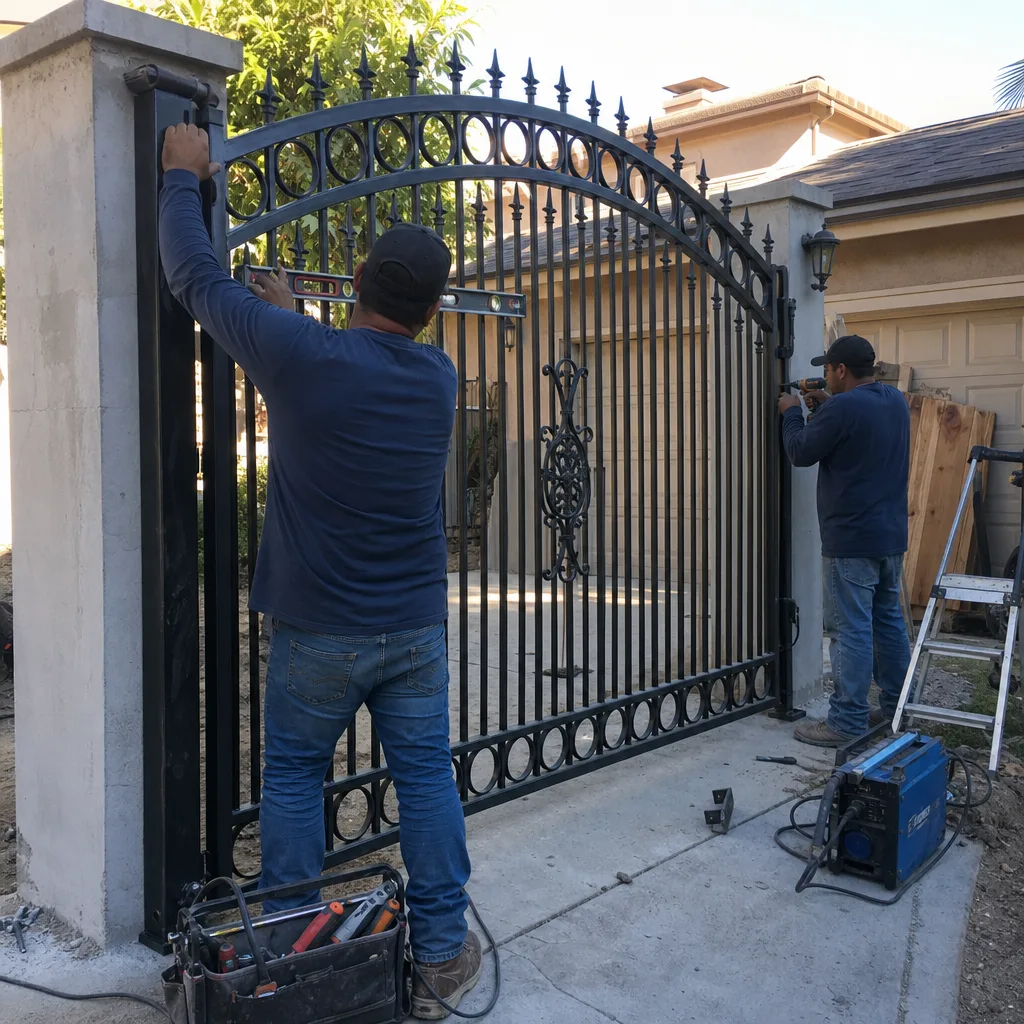
Twice a year: once in April, before the summer heat-and-UV window, and once in October, before the winter wet-and-wind window. These two visits target the specific failure modes that Simi Valley’s climate produces, and they outperform any generic quarterly schedule. Call (805) 516-0479 to schedule a seasonal visit with a written price before any work starts.
The most common cause in Simi Valley is limit-switch drift from thermal expansion, accumulated over weeks of 95°F days. The operator’s recorded open position no longer matches the gate’s physical travel, so the operator stops early. Re-setting the limits fixes it. In our experience, a misaligned photo-eye is the second most common cause, so we check both before doing anything more expensive.
Yes, especially if it’s a swing gate. The Santa Ana season puts wind loads on the gate that the rest of the year doesn’t produce, and any hinge play or bracket looseness that developed over the summer gets worked larger with every gust. The October visit is the cheapest time to find and fix that looseness. It’s also when we check the operator housing seal for water ingress before the first real storm.
We quote between $120 and $220 for a standard seasonal maintenance visit in Simi Valley, depending on the gate type and what’s accessible. That includes the inspection, limit check, lubrication, photo-eye alignment, and an updated record. You’ll see the exact price in writing before anything is done. For a specific quote on your gate, call (805) 516-0479; estimates are free.
You can, on most residential operators, by following the manufacturer’s procedure in the manual. The key is to record the current setting before you change anything, and to re-check after the next big temperature swing. If you don’t have the manual, or you’re not comfortable with it, we do standalone limit-switch re-sets in Simi Valley for $75 to $140, with the new positions photographed and recorded.
Test it: disconnect the operator from line power, run the gate open and closed, and count the full cycles until the battery voltage sags. A battery that once did 10 cycles and now does 4 has lost capacity. In Simi Valley’s heat, we see batteries degrade faster than in coastal climates. Replace when the count drops significantly, and record the number each April so you can see the trend. Call (805) 516-0479 for a battery test and replacement with a written price first.
The Bottom Line
Simi Valley’s gate equipment doesn’t fail on a calendar; it fails on a climate cycle. The August emergency starts with the April visit that never happened. The January water-damaged board starts with an October seal that wasn’t checked. Two targeted seasonal visits, one in April and one in October, prevent most of the failures we repair every year in Simi Valley. The other half of the work is the record: write down the limit settings, the battery counts, the photo-eye alignments, and the part numbers, every time. When something eventually breaks, you’ll have a map to the fix instead of a mystery. For more guides & resources on keeping your gate running, visit our blog. And when you call, you’ll know what to ask for.
For a free estimate on seasonal gate maintenance in Simi Valley, call (805) 516-0479. A live person answers, the price comes in writing before any work begins, and the visit ends with a documented photo record of what was found and what was done.
Written by Adrian Vance, Owner at Vance Gate Repair Simi Valley, serving Simi Valley since 2014.