
Last updated September 20, 2026
Free on-site gate assessment - hinges, posts, and your LiftMaster or Nice gate operator checked before anything is quoted
The assessment is free and the quote is the invoice.

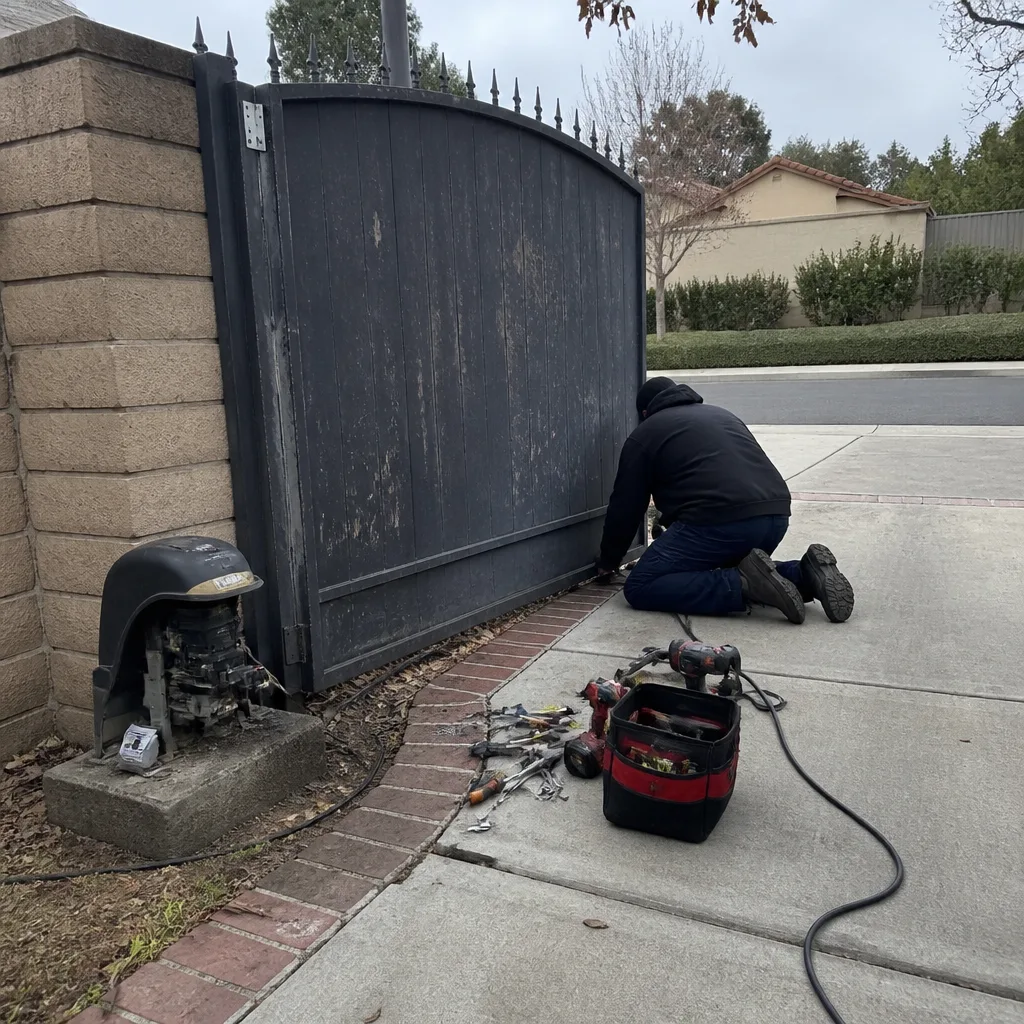 Before
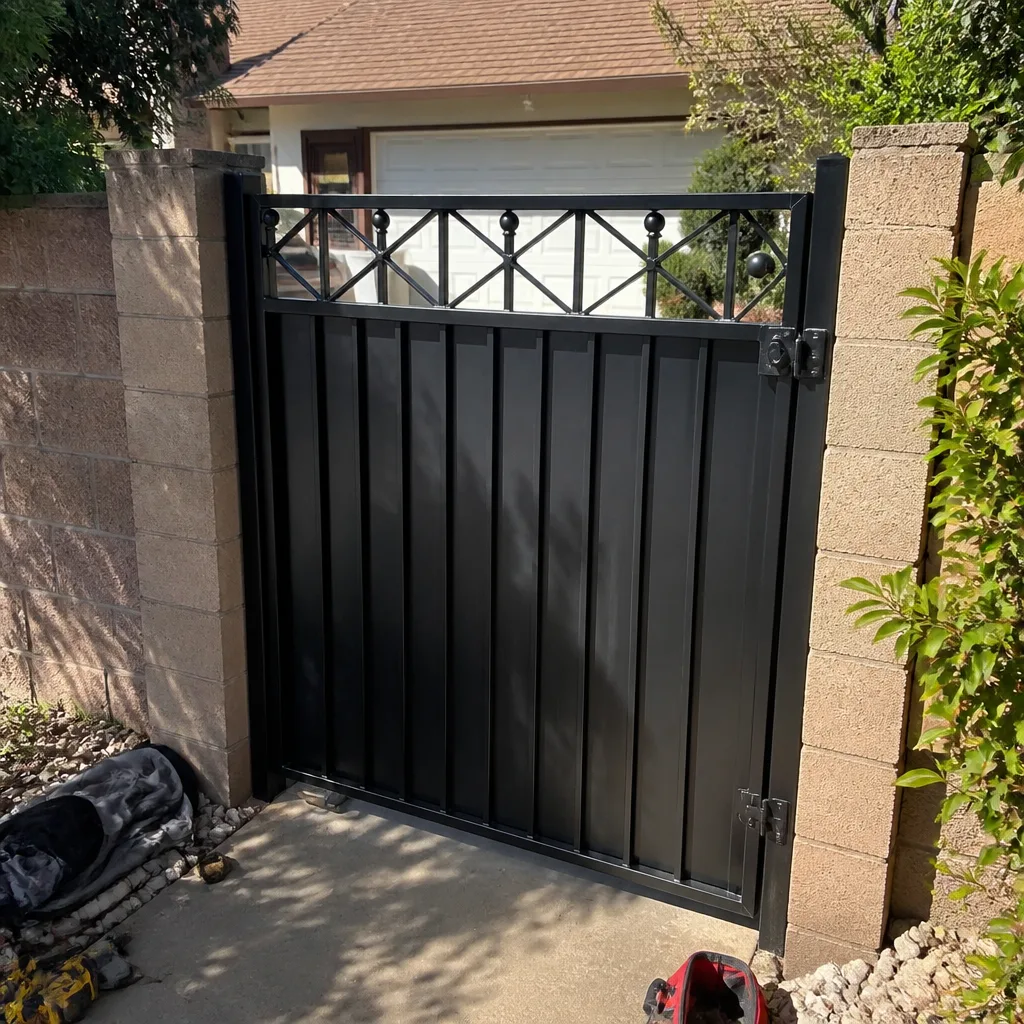 After
After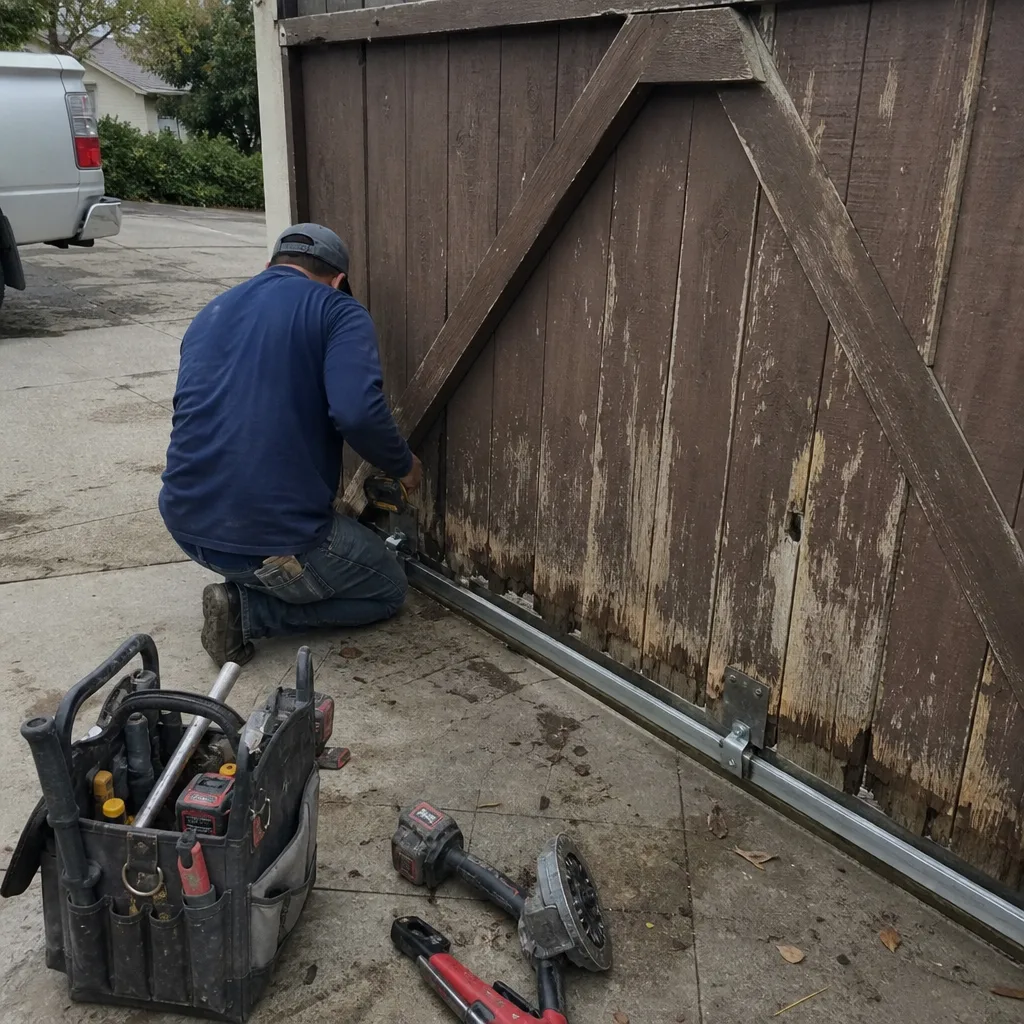 Before
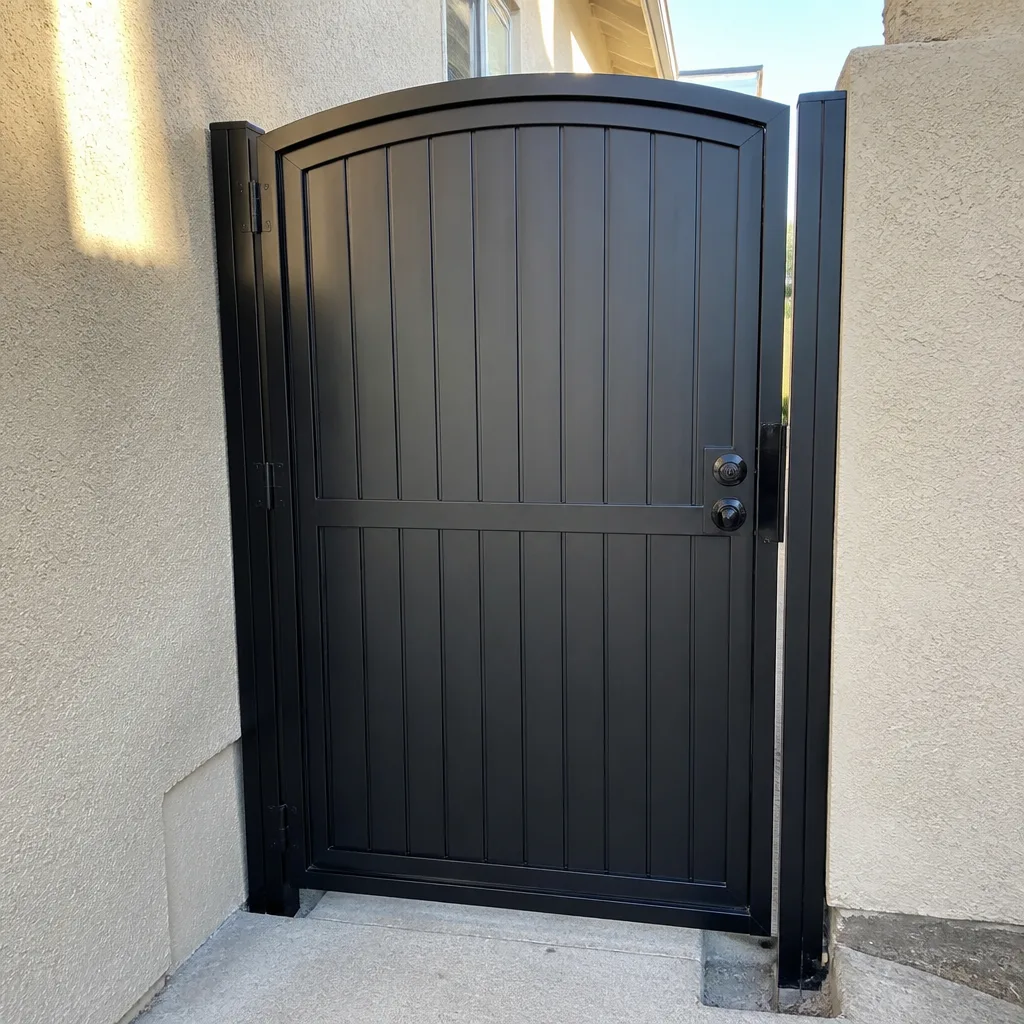 After
After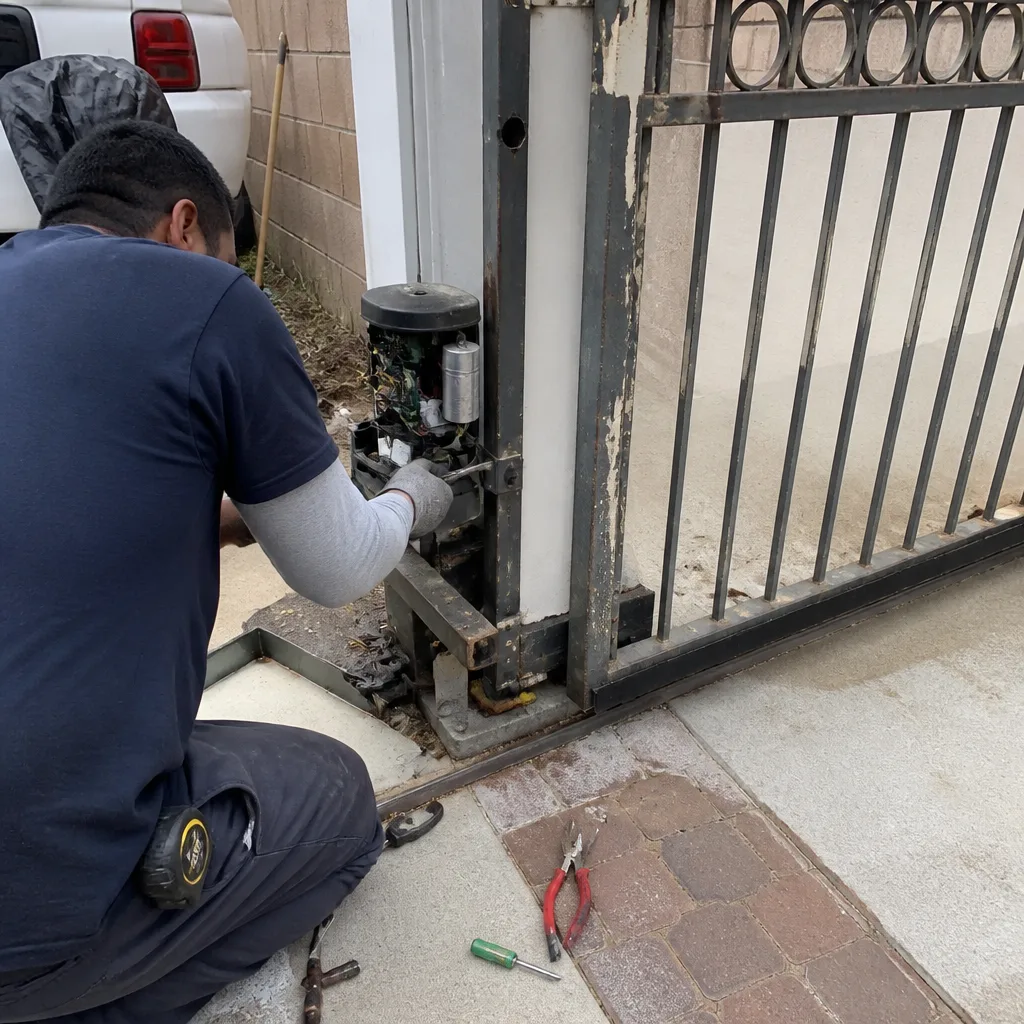 Before
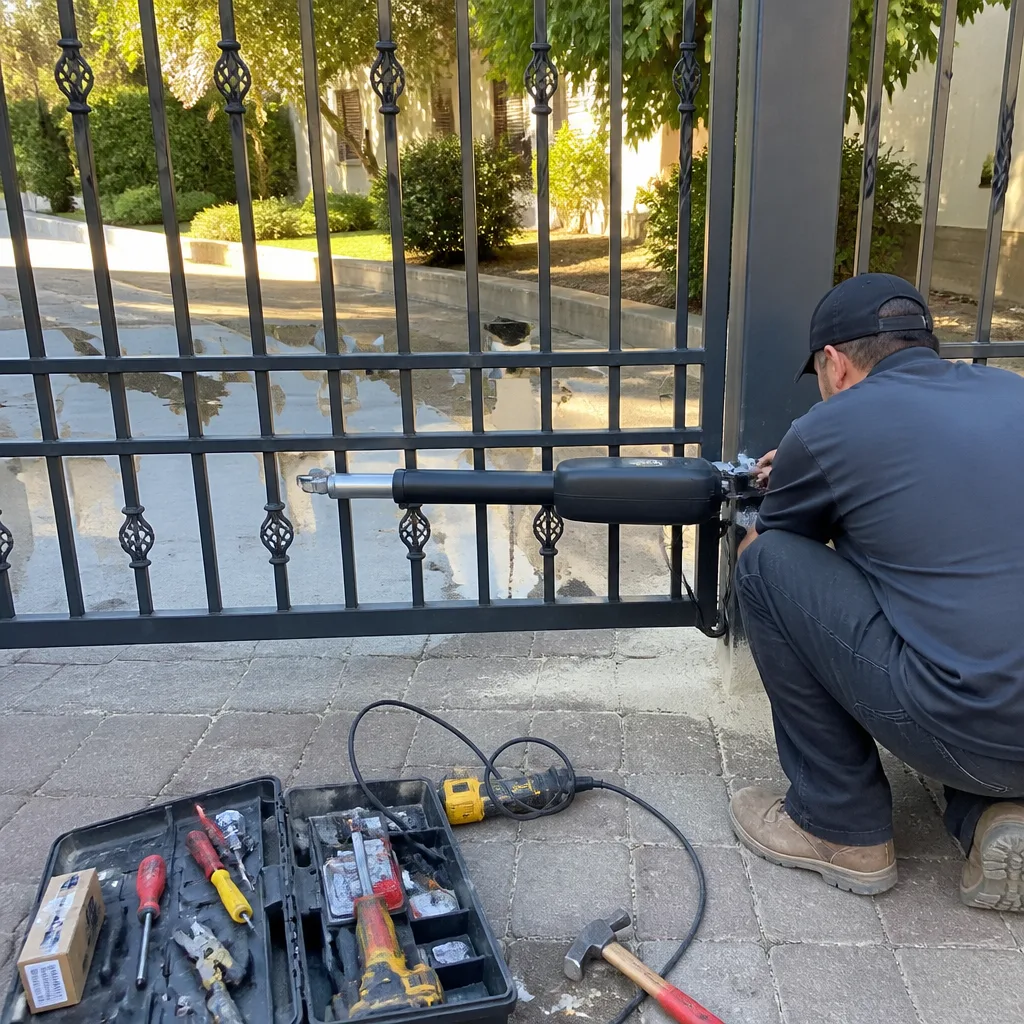 After
AfterGate Repair Permits, Codes & Inspections in CA: What You Need to Know
A homeowner in Simi Valley replaces a failed gate motor with the identical model in the same mounting position. No permit. The same homeowner, a month later, decides to add a keypad entry system and runs a new low-voltage home-run from the gate back to the main electrical panel. That second project may trigger a permit, and most people never think to ask. The dividing line in California gate work is not the gate itself. It is the electrical scope, the structural modification, and whether the operator carries the right safety listing. This guide draws that line precisely, section by section, so you know which side of it your project sits on before you start, and exactly where Simi Valley adds its own requirements on top of the state baseline. For How to Hire a Gate Repair Contractor in Simi Valley: A Step-by-Step Guide, see our companion resource.
Quick Answer
Most residential gate repairs in California do not require a permit: replacing a failed motor with an identical unit, swapping a control board, or repairing a hinge is maintenance, not construction. Permits typically enter the picture when you run new electrical circuits to the gate, replace a gate with one that has different structural loads, or install a new operator on a gate that never had one. Simi Valley follows the California Building Code and the California Electrical Code, and the gate operators themselves must be UL 325 compliant, which is a product safety listing separate from any city permit.
Table of Contents
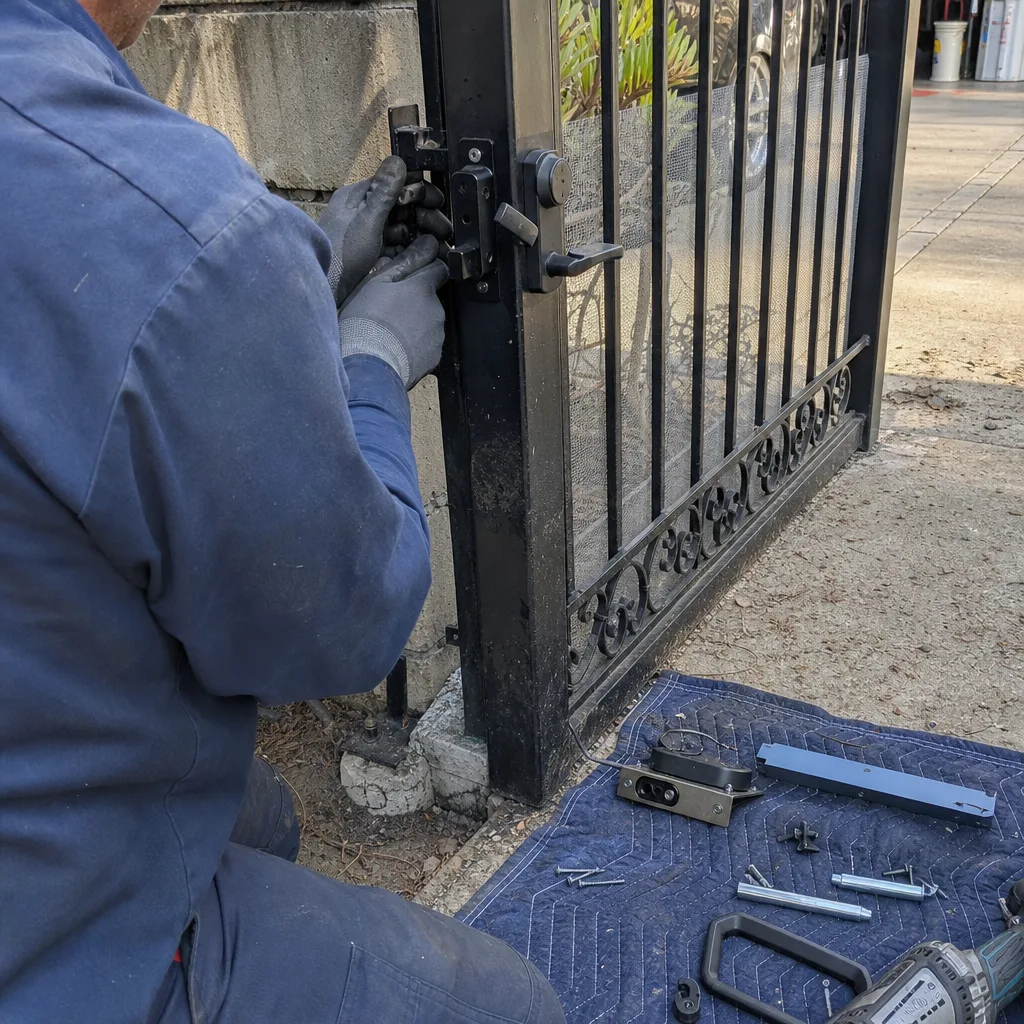
- What Actually Triggers a Gate Permit in California
- The California Building Code and Electrical Code Sections That Apply
- How Simi Valley’s Municipal Requirements Layer on Top
- UL 325 Compliance: What It Is and Why It Matters
- HOA Design Review: The Parallel Approval Track
- Unpermitted Gate Work and California Home Sale Disclosures
- Step-by-Step: The Inspection Process for a Permitted Gate Installation
- Common Mistakes to Avoid
- When to Call a Professional
- Frequently Asked Questions
BeforeAfterWhat Actually Triggers a Gate Permit in California
The trigger is rarely the gate. We’ve walked onto hundreds of properties in Simi Valley where a homeowner assumed the whole project was “just a gate repair” and was surprised to learn the electrical run was the permitting event. The California Building Code (CBC) and California Electrical Code (CEC) both draw the line at the same place: if you are replacing like for like, you are maintaining. If you are extending, adding, or altering, you are constructing. For Gate Repair Warning Signs: A Simi Valley Homeowner’s Reference Guide, see our dedicated breakdown of gate work that does and does not require a permit in California.
Work That Typically Does NOT Require a Permit
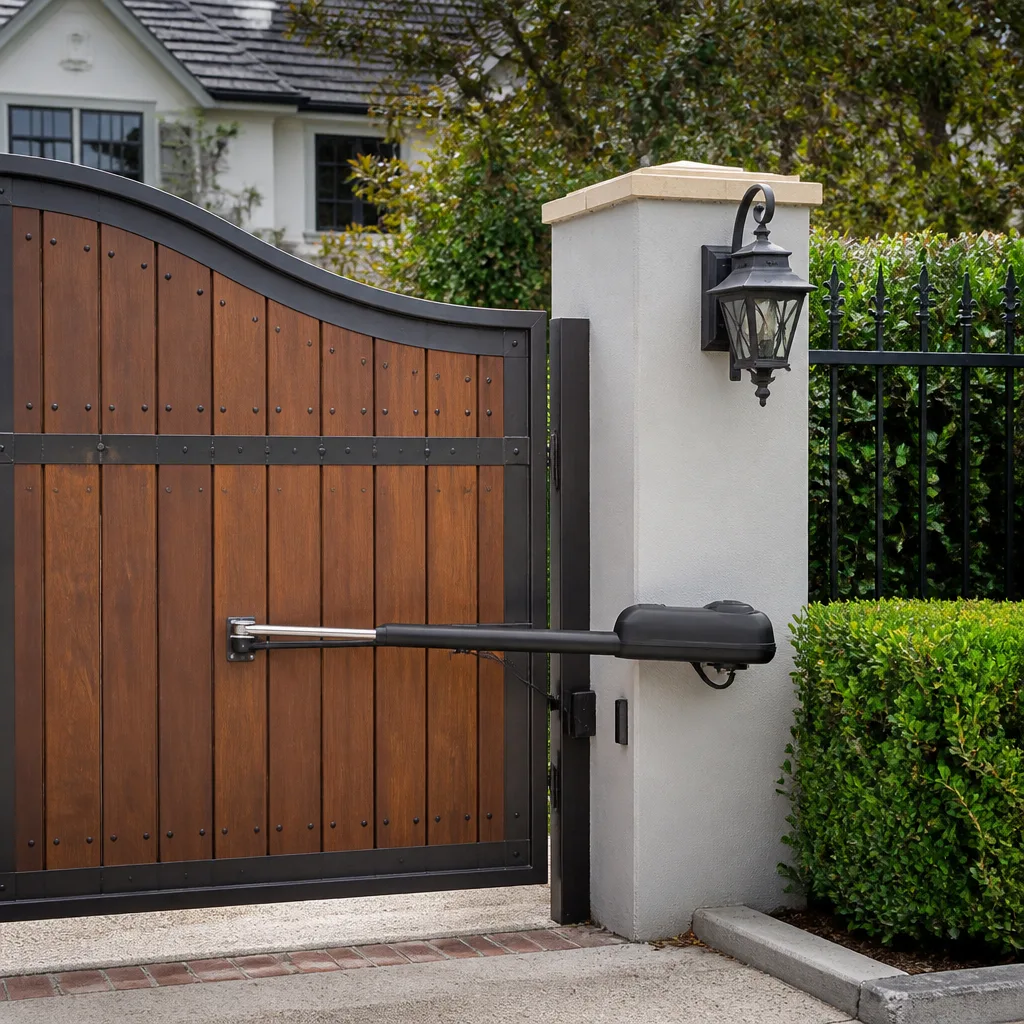
- Replacing a failed gate motor with an identical unit in the same mounting location, wired to the same existing circuit. This is repair, not new work.
- Swapping a control board, limit switch, or remote receiver inside an existing operator housing. The housing and circuit remain unchanged.
- Repairing hinges, welding a cracked gate frame, or replacing rollers on a sliding gate. No electrical change, no structural-load change.
- Replacing a photo-eye or edge sensor with a compatible part on an existing UL 325 compliant operator.
- Reprogramming remotes, keypads, or access codes on an operator that is already installed and listed.
Work That Typically DOES Require a Permit
- Running a new electrical circuit from the main panel to the gate. Under the CEC, any new branch circuit is a permit event, even low-voltage control wiring in some municipalities when it is part of a new installation rather than a repair.
- Installing a new gate operator on a gate that never had one. This is an addition, and the CBC treats it as a change to the gate structure’s function.
- Replacing a manual gate with a heavier automatic gate that changes the weight and wind load on the existing posts or footings.
- Adding a pedestal, bollard, or concrete pad for a new operator or keypad. The concrete work itself may be exempt, but the electrical it supports is not.
- Installing a new keypad or card reader with a home-run to an access control panel that requires new conduit or cable outside an existing raceway.
The distinction that surprises people most in Simi Valley: the line is the electrical scope, not the gate. You can rebuild an entire gate frame on site as a repair and not pull a permit. You can install a new keypad 30 feet from the nearest outlet and trigger an electrical permit. The gate is rarely the event. The wire is.
The California Building Code and Electrical Code Sections That Apply
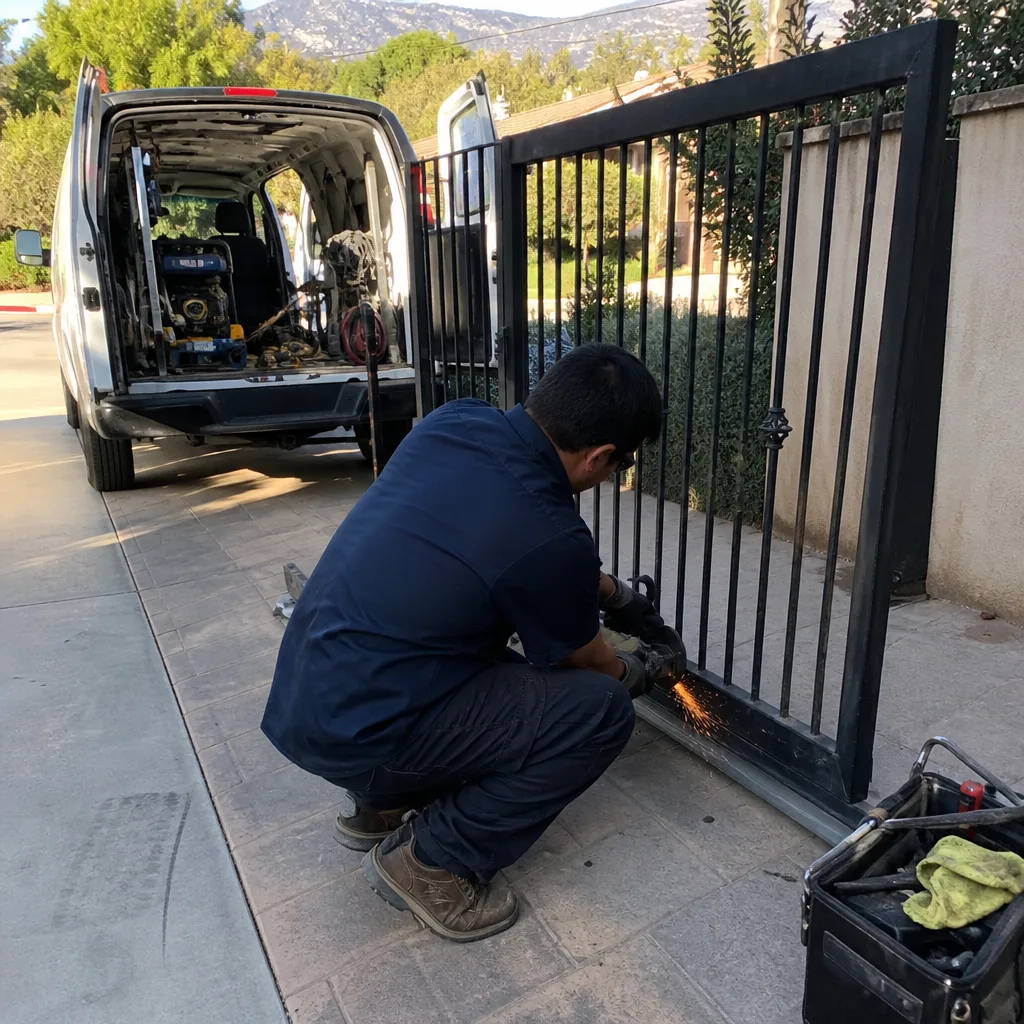
California does not have a standalone “gate code.” Gates fall under the general structural provisions of the California Building Code and the electrical provisions of the California Electrical Code, and gate operators fall under a separate product safety standard called UL 325. If you want to look at the actual text, these are the sections a building official in Ventura County will cite.
California Building Code References
- CBC Chapter 1, Division 2 (Administration) gives the building official authority to require permits for any work that is not explicitly exempt. This is where “repair” gets defined narrowly enough that a gate swap stays exempt but a gate addition does not.
- CBC Section 105.2 (Work Exempt from Permit) lists what does not require a permit. Ordinary repairs, defined as restoring to a previous condition using the same materials, are exempt. Adding or extending is not.
- CBC Chapter 16 (Structural Design) applies when a gate is replaced with a heavier one, a post is re-set, or a footing is changed. The wind-load calculations in Chapter 16 matter for tall solid-panel gates in Simi Valley, where Santa Ana winds can exceed 60 mph in the foothill corridors.
- CBC Chapter 30 (Elevators and Conveying Systems) covers vehicle gates with operators in limited commercial applications, but is rarely cited for single-family residential driveways.
California Electrical Code References
- CEC Article 300 (Wiring Methods) governs how a new run from the main panel to the gate must be routed, buried, and sleeved. Direct-burial cable under a driveway in Simi Valley must be at the depth and separation distance the inspection requires.
- CEC Article 110 (Requirements for Electrical Installations) is the catch-all an inspector cites for workmanship, grounding, and termination quality on a new gate circuit.
- CEC Article 250 (Grounding and Bonding) applies to metal gate frames and posts when a new operator is installed. The gate itself may need a grounding bond depending on the installation and the operator manufacturer’s instructions.
- CEC Article 430 (Motors and Motor Controllers) covers the disconnect switch requirement for gate motors. A new circuit to a gate operator usually needs a means of disconnect within sight of the motor, and Article 430 is the section that requires it.
The practical takeaway: nobody at a permit counter will hand you a form that says “gate permit” in Simi Valley. The permit will be issued as an electrical permit or a building permit for the structural change, and the gate operator is part of the scope description. The sections above are what the reviewing plan checker references. Knowing them by number is not required. Knowing what triggers them is.
How Simi Valley’s Municipal Requirements Layer on Top
Simi Valley adopts the California Building Standards Code without major local amendments, but the city’s Building and Safety Division adds two practical layers: the plan check review at the Simi Valley permit counter, and the inspection scheduling through the city’s building division. The city does not have a separate gate ordinance. What it has is an enforcement posture that tracks state thresholds closely, and a residential review process that is faster than unincorporated Ventura County because the city is a single point of contact.
In Simi Valley, a typical permitted residential gate operator project moves through this sequence:
- Submit a simple electrical plan or a diagram showing the panel location, the circuit rating, the conduit path, and the operator’s UL 325 listing information.
- The plan check verifies the circuit sizing and the operator listing. For a basic 20-amp 120-volt circuit to a swing gate, this review is often same-day.
- After plan check approval, the permit is issued and the work can begin. The city will not issue a permit for an unlisted operator, so the UL 325 requirement gets enforced at the counter.
- Rough inspection covers the trench, conduit, and grounding before backfill. Final inspection covers the operator installation, the safety devices, and the disconnect location.
For a repair that stays on the existing circuit, none of this applies. The city’s position, consistent with the state, is that a like-for-like motor replacement is maintenance and exempt. The practical problem is that some homeowners assume every electrical change is a repair, and a new home-run to the gate is not. We’ve worked with Simi Valley homeowners who discovered the distinction at the plan check counter, not at the job site. The city’s permit threshold for residential electrical work is $500 in market value of the electrical installation, a figure that catches most new gate circuits and operator installations but never catches a motor swap.
UL 325 Compliance: What It Is and Why It Matters
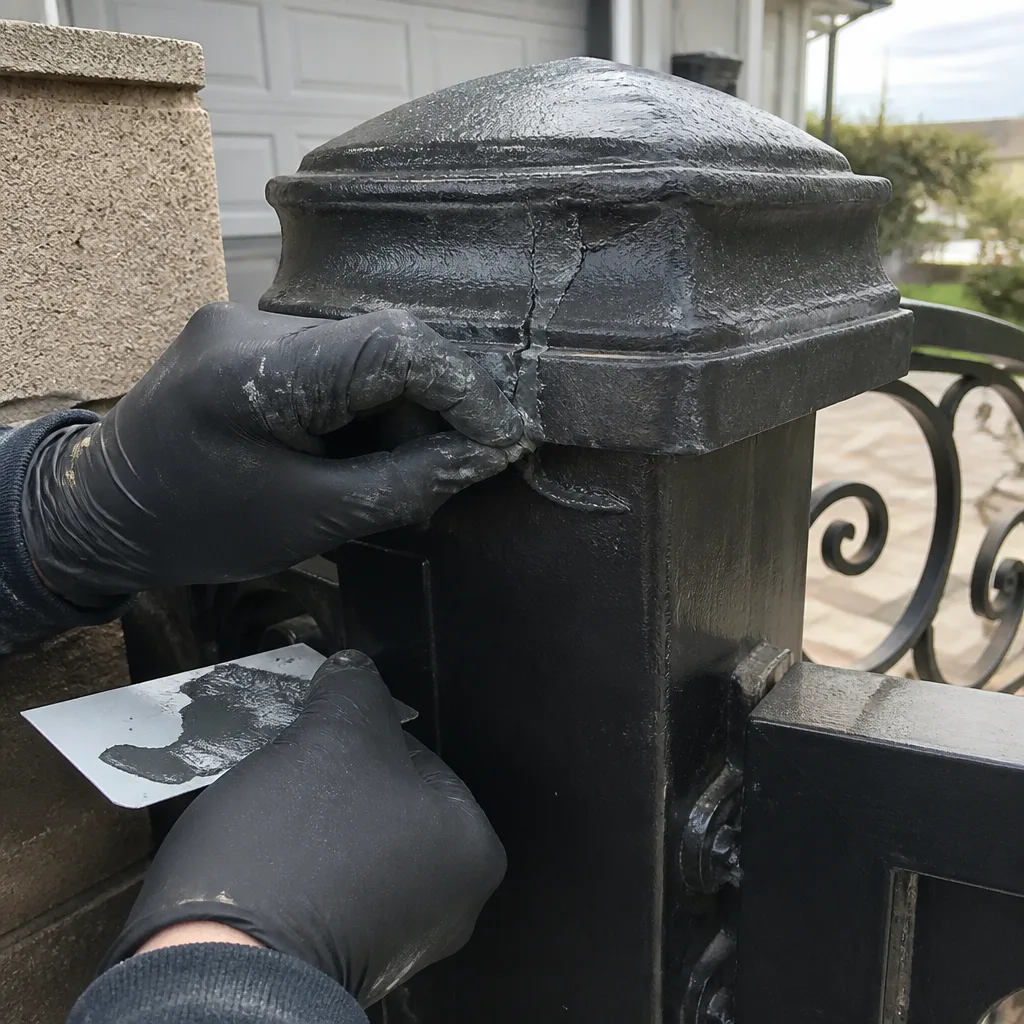
UL 325 is a product safety standard for automatic gate operators, published by Underwriters Laboratories. It exists because a moving gate is a machine, and machines that move under power without the right safeguards can strike a person, a child, or a car with enough force to cause serious injury. UL 325 sets the requirements for the safety devices that an operator must include or support: the photo-eye that detects a person in the gate path, the edge sensor that reverses the gate on physical contact, and the force settings that govern how hard the gate pushes before reversing. Every residential gate operator sold legally in California for new installation carries a UL 325 listing. Brands we service like FAAC, BFT, Linear, and Viking all produce UL 325 listed operators, and the listing is printed on the data plate and in the installation manual.
The liability dimension matters even when no permit is involved. If a gate strikes a person and the operator was not UL 325 compliant, the homeowner’s insurance position becomes difficult. The standard is the baseline for what a reasonably safe installation looks like, and an unlisted operator or a listed operator with the safety devices disconnected is a defect in the installation. We see this in Simi Valley regularly: a homeowner inherits a gate operator from a previous owner, the photo-eye was removed years ago to stop false triggers, and the gate now closes on whatever is in the path. That is not a minor issue. The UL 325 listing only protects anyone if the required devices are present, wired, and set correctly. A listed operator with its entrapment protection bypassed is worse than no operator at all, because it looks legitimate while being dangerous.
HOA Design Review: The Parallel Approval Track
An HOA design review is not a permit, and a permit is not an HOA approval. They are two separate tracks that run at the same time, and neither waits for the other. In Simi Valley’s planned communities, the HOA’s architectural committee cares about appearance, materials, height, and color. The city’s building division cares about structure, electrical, and safety. A project can sail through the city and stall at the HOA, or pass the HOA and hit a city code issue. Homeowners who treat them as one process end up delayed on the track they did not start early.
The practical sequence for a Simi Valley homeowner in an HOA-governed neighborhood:
- Pull the HOA’s design review guidelines before doing anything else. Most Simi Valley HOAs have a written standard for gate height, material, finish, and automation equipment visibility.
- Submit the HOA application at the same time as the city permit application. The review windows run in parallel, so a three-week HOA review does not add three weeks on top of a two-week city review if they start on the same day.
- Do not begin work until both approvals are in hand. Starting on one approval while the other is pending is the most common delay we see, and it creates rework when one body requires a change.
- Some Simi Valley HOAs require a matching finish or a specific gate style. The operator choice is rarely restricted, but the keypad placement and conduit routing may be.
The HOA track is a documentation drill. The committee wants a drawing, a photo, a material list, and sometimes a sample finish. The city wants a plan, a listing, and an inspection. Running both in parallel is a scheduling problem, not a technical one, and it is one of the reasons a written scope matters: the same document that goes to the city can often go to the HOA with minimal adjustment.
Unpermitted Gate Work and California Home Sale Disclosures
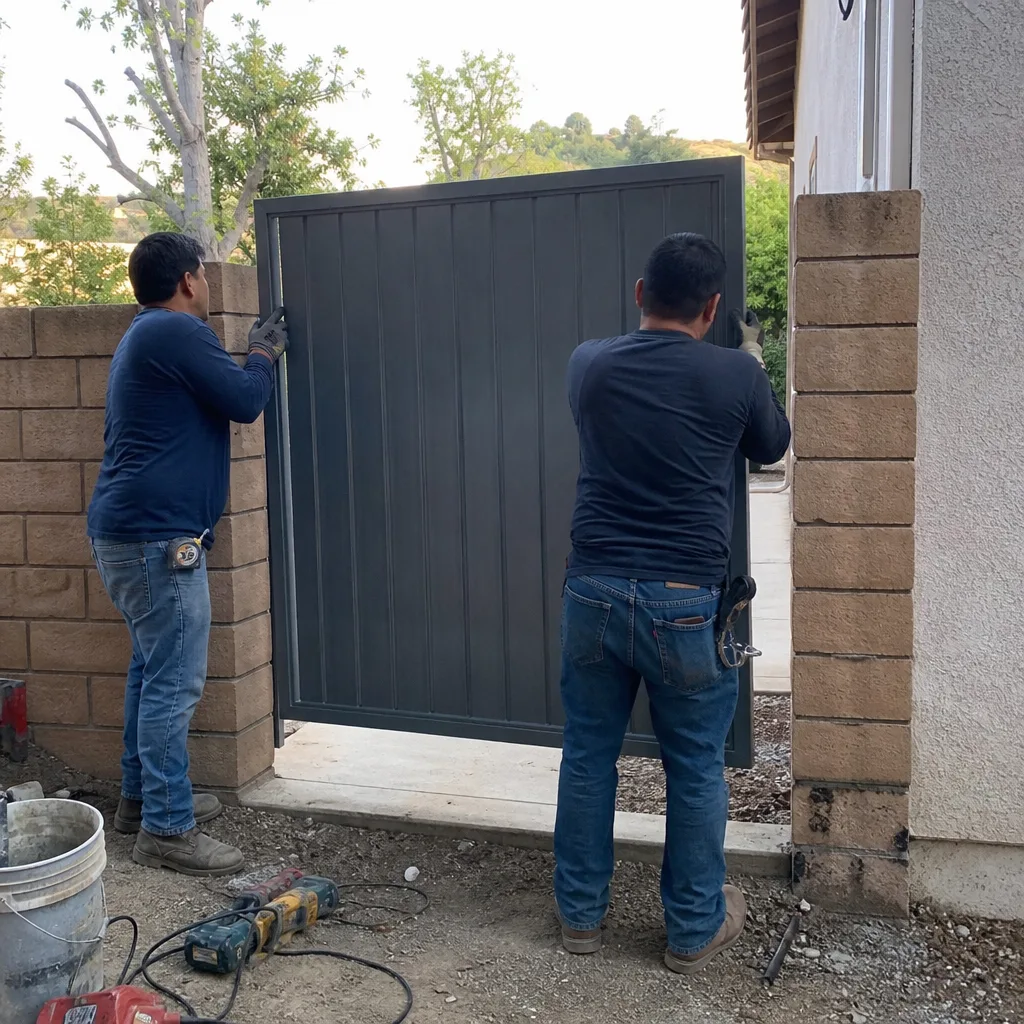
California’s home sale disclosure requirement is unforgiving about unpermitted work. The Transfer Disclosure Statement and the Seller Property Questionnaire both ask, in substance, whether any work was done on the property without a permit, and whether the seller is aware of any condition that would require disclosure. A seller who installed a new gate operator with a new electrical circuit years ago, without a permit, faces a choice at sale time: disclose it and potentially negotiate a price adjustment, or withhold it and carry the liability of a nondisclosure claim. The standard California purchase agreement allows a buyer to investigate permits, and a buyer who finds unpermitted electrical work after the sale has recourse. See more guides & resources on gate compliance and home sale disclosures. The three-year statute on fraud claims from the date of discovery, not the date of the work, means the exposure survives the sale.
Retroactive permitting for a gate operator is possible in Simi Valley, but it is not a walkthrough. The city will allow a permit application for existing work, and the inspection will look at what is accessible: the panel connection, the conduit if visible, the operator listing, and the safety devices. What is buried underground will be accepted on a field report if the work appears professional and the circuit tests correctly, but the standard is not lower. The inspector is not there to bless the work, but to verify it meets current code. We’ve seen unpermitted gate electrical that passed on the first inspection, and we’ve seen work that needed remediation before the inspector would sign off. The disclosure question, not the inspection, is usually what forces the permit.
Step-by-Step: The Inspection Process for a Permitted Gate Installation
Here is the actual sequence for a permitted, code-compliant gate operator installation in Simi Valley, from the moment the permit is pulled to the moment the final inspection clears.
- Permit application and plan check. Submit the scope, the operator listing, and the electrical plan. The plan check verifies circuit sizing, grounding, and UL 325 compliance for the operator.
- Permit issuance. The city issues the electrical permit. The approved plans are now the governing document for the work.
- Rough work. Trench the conduit path if the circuit is new. Install the conduit, pull the circuit, and set the disconnect switch. Leave the trench open for the rough inspection.
- Rough inspection. The inspector checks the conduit depth, the wire size, the grounding bond, and the disconnect placement. This is the point at which a failed inspection matters most, because the trench is still open.
- Operator and safety device installation. Mount the operator, align the photo-eye, set the edge sensor, wire the keypad or access control, and program the force settings.
- Final inspection. The inspector verifies the operator listing, the entrapment protection function, the disconnect location, and the panel termination. The job is signed off, and the permit is closed.
The real function of the inspection is not to catch mistakes. It is to put a public record behind the work. A closed permit with a passed final inspection is the single strongest piece of documentation you can hand a future buyer, an insurance adjuster, or an HOA board. It answers every question about the gate installation without you saying a word.
Common Mistakes to Avoid
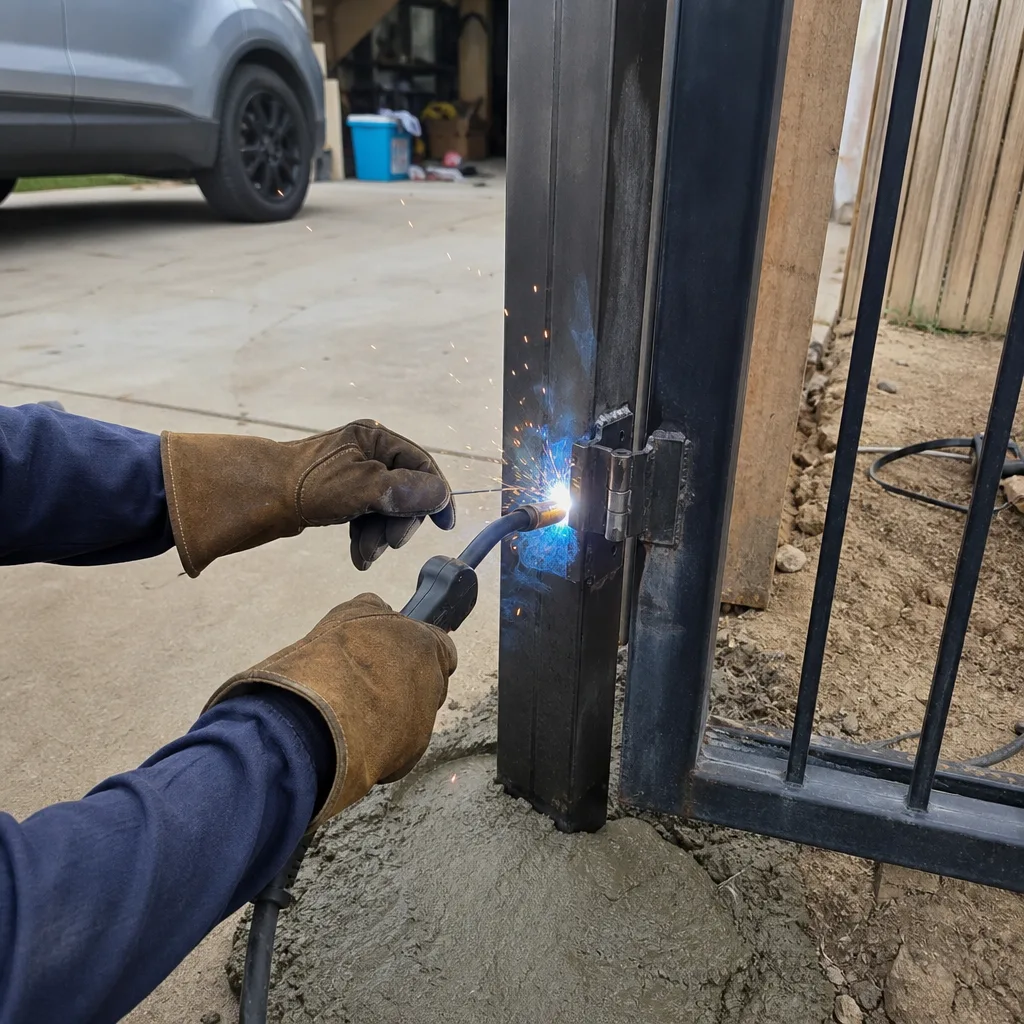
- Assuming every electrical change is a repair. A like-for-like motor swap needs no permit; a new home-run to the panel usually does. The threshold is the electrical scope, not the gate work. In Simi Valley, homeowners most often trip on this when they add a keypad or intercom to a gate that previously had only a remote.
- Bypassing UL 325 safety devices to stop nuisance reverses. The photo-eye or edge sensor that triggers when the wind blows is doing its job. Disabling it to stop the false triggers is a liability event and a code violation on any inspected installation.
- Treating HOA review and city permitting as one process. They run in parallel, have different standards, and neither waits for the other. Start both applications on the same day in a Simi Valley HOA community, or expect to lose two to three weeks on the track that started late.
- Using an unlisted operator from an online marketplace. The price is lower because the listing is absent. A new installation with an unlisted operator will not pass a Simi Valley final inspection, and the operator becomes a retrofit liability.
- Burying the conduit before the rough inspection. Once the trench is closed, the inspector cannot verify depth or separation. If the inspector asks for a re-open, the cost and labor exceed what the permit saved by a wide margin.
- Leaving unpermitted gate electrical off the seller disclosure. California’s disclosure forms do not expire because the work was years ago. The buyer’s remedy runs from discovery, and discovery is easy when the buyer’s inspector opens the panel.
- Skipping the grounding bond on a metal gate frame. A new operator on a metal gate in Simi Valley is a grounding question under CEC Article 250, not a preference. An inspector will check, and a missed bond is a correction notice.
When to Call a Professional
If the project stays on an existing circuit, uses a UL 325 listed operator, and replaces like for like, a competent homeowner can often handle it with the manufacturer’s instructions in hand. The moment the scope crosses into new conduit, new circuits, new operator installations, or any structural change to the gate itself, the permit question arrives and the code details multiply. That is when a professional who has passed Simi Valley inspections before is worth the cost, not because the work is magic, but because the documentation and the inspection history are. Vance Gate Repair Simi Valley provides free estimates for our Gate Repair services, operator replacement, and gate installation with a written scope and a written price before any work starts. Call (805) 516-0479 with the details of your project and we will tell you which side of the permit line it sits on.
Frequently Asked Questions
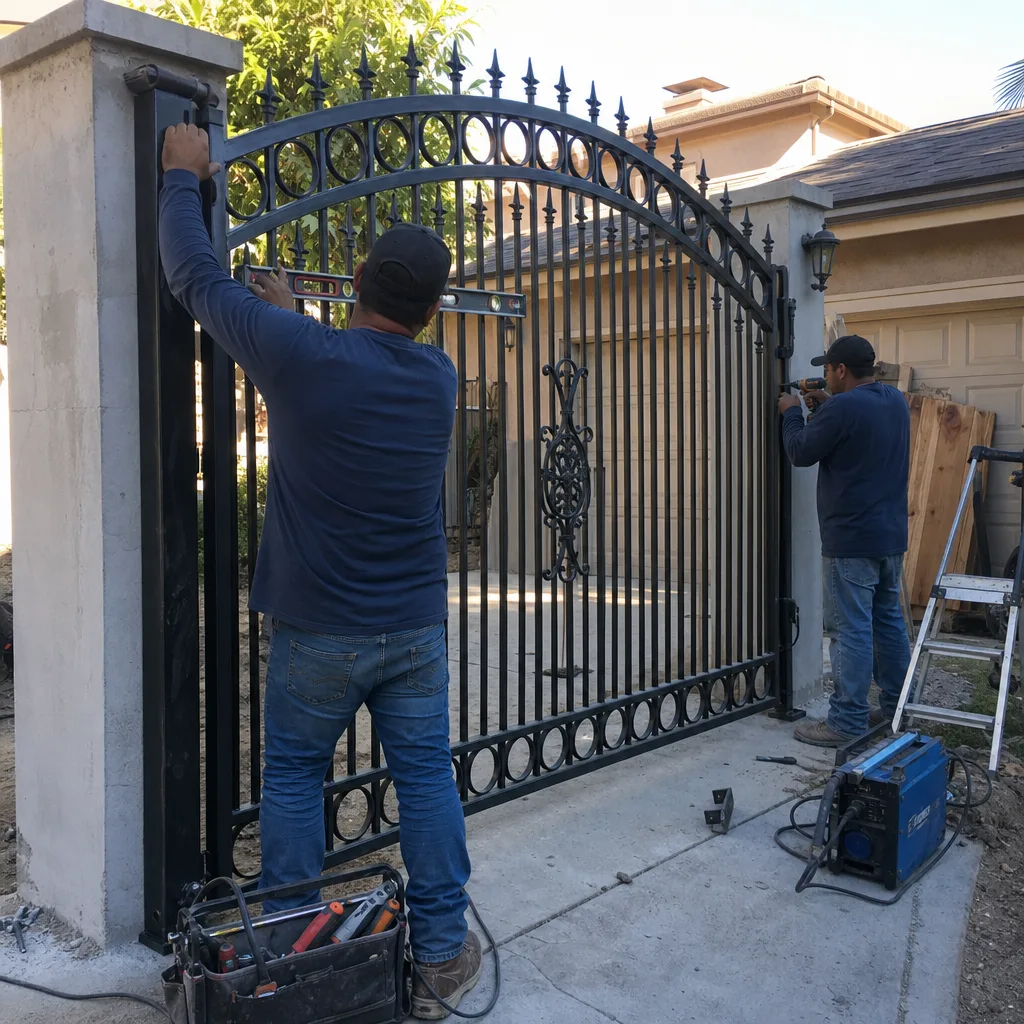
No, replacing a failed gate motor with an identical unit in the same location, on the same circuit, is considered maintenance and is exempt from permit requirements under CBC Section 105.2. The exemption applies as long as there is no new electrical run, no new operator installation, and no structural change to the gate. If you add a new circuit or upgrade the electrical service to the gate, the permit question reopens. Call (805) 516-0479 if you are not sure which category your project falls into.
UL 325 is the product safety standard for automatic gate operators, covering the entrapment protection devices and force settings that keep a gate from injuring a person or damaging a vehicle. Every new residential gate operator sold legally in California must carry the listing, and brands like FAAC, BFT, and Viking all produce UL 325 listed operators. An unlisted operator will not pass a permitted inspection and creates liability exposure on any installation.
Simi Valley follows the California Building Code and Electrical Code without adding a separate gate ordinance, so the permit triggers are the same as most California cities. The city’s Building and Safety Division handles plan check and inspections in one location, and its enforcement posture on new electrical circuits to gates is consistent with the state baseline. What differs is the process speed, not the threshold.
They are separate tracks that run in parallel and do not wait for each other. The HOA reviews design and appearance, the city reviews safety and structural compliance, and starting both applications on the same day is the only way to avoid stacked delays. A project can pass one and stall on the other, so treat them as two approvals with two different standards.
California’s seller disclosures require you to state whether any work was done without a permit, and a buyer who discovers unpermitted gate electrical after the sale has legal recourse that runs from the discovery date. The exposure survives the sale and can become a fraud claim. Retroactive permitting is possible in Simi Valley, but the standard is current code, not a grace period.
For a like-for-like motor replacement on an existing circuit, yes, a same-day installation is often possible. For a new operator installation that requires a permit, a new circuit, or an inspection, the work is scheduled around the city’s plan check and inspection calendar, not a dispatch clock. We quote a written price and a realistic timeline before any work starts.
A permitted gate operator installation with a new electrical circuit typically runs between $2,200 and $4,800 in Simi Valley, depending on the operator brand, the conduit run length, and whether the existing gate structure needs any modification to carry the operator. The permit fee is additional and paid to the city directly. Call (805) 516-0479 for a written estimate on your specific gate and electrical configuration, and the price is quoted and agreed before any work begins.
The Bottom Line
The permit question for California gate work has a clear answer: maintenance is exempt, addition is not, and the distinction is the electrical scope, not the gate. A motor swap on an existing circuit needs no permit. A new circuit, a new operator installation, or a structural gate change usually does. Simi Valley enforces the state baseline without adding special gate requirements, UL 325 compliance is a product safety listing enforced at the permit counter and in the field, HOA design review runs in parallel with the city, and unpermitted work becomes a disclosure problem at sale time. Vance Gate Repair Simi Valley home has handled gate repair in Simi Valley, gate installation in Simi Valley, and gate motor and opener service in Simi Valley since 2014, with a written price and a documented photo record on every visit so the permit question is answered before the work begins. Call (805) 516-0479 for a free estimate, and we will tell you which side of the line your project sits on.
Written by Adrian Vance, Owner at Vance Gate Repair Simi Valley, serving Simi Valley since 2014.